

Hair extension technology has evolved significantly, with Hair Extensions Europe establishing itself as a premier provider of 100% natural hair solutions. The global hair care market is projected to reach substantial valuations in the coming years, driven by consumer demand for versatile styling options. According to recent industry reports, the preference for temporary versus semi-permanent solutions varies greatly based on lifestyle and budget. Understanding the mechanical and aesthetic differences between tape-in and clip-in systems is essential for achieving a seamless, natural look.
What Are Tape-In Extensions?
Tape-in extensions represent the gold standard for semi-permanent hair enhancement. These extensions consist of thin wefts of human hair with a medical-grade adhesive strip running along the top edge. This adhesive allows the weft to sandwich a thin layer of your natural hair, creating a flat, secure bond that lies flush against the scalp.
Tape-in extensions are a semi-permanent hair extension method that uses adhesive strips to attach wefts to natural hair. This method is favored by professionals for its ability to provide a virtually undetectable finish. Because the bond is flat, it does not create bulk or lumps, making it ideal for fine hair textures that require a lightweight solution.
The primary advantage of tape-ins is their longevity. When maintained correctly, they can last between six to eight weeks before requiring a move-up appointment. This duration is significantly longer than temporary options, offering a consistent look for special events or long-term styling goals. The adhesive is designed to hold firmly during washing and styling, yet it can be safely removed with a specialized solvent that breaks down the bond without damaging the natural hair shaft.
For those seeking a low-maintenance routine, tape-ins are an excellent choice. They do not require daily application, saving valuable time in the morning routine. However, they do require specific care products, such as sulfate-free shampoos and alcohol-free conditioners, to prevent the adhesive from weakening prematurely. Proper hair care products are critical to extending the life of the adhesive bond.
What Are Clip-In Extensions?
Clip-in extensions offer the ultimate in versatility and control. These wefts feature small, sturdy metal clips attached to the top of the hair piece. The clips snap open and closed, gripping your natural hair securely. This system allows you to add volume, length, or highlights instantly and remove them completely before sleeping.
Clip-in extensions are a temporary hair enhancement system that uses mechanical clips to attach wefts to natural hair for instant styling. This method is perfect for individuals who do not want to commit to a long-term installation or who have a busy lifestyle that requires frequent changes in appearance. You can wear them for a night out and remove them the next morning, allowing your natural hair to breathe and recover.
The ease of application is the standout feature of clip-ins. With practice, most users can apply a full head of extensions in under five minutes. They require no professional assistance, no heat, and no adhesives. This makes them a safe option for those with sensitive scalps or allergies to chemical adhesives. Furthermore, because they are not subjected to the daily wear and tear of sleeping and showering, the hair quality often remains pristine for a longer period between purchases.
However, clip-ins do require more daily maintenance. You must ensure they are completely dry before application to prevent slippage. Additionally, the clips can create slight tension on the natural hair if not distributed correctly. It is crucial to use high-quality, smooth-acting clips to minimize breakage. Clip-in human extensions from reputable suppliers ensure that the hair cuticle is aligned, reducing tangling and matting.
Comparison Table
To help you make an informed decision, here is a detailed comparison of the two most popular extension types available at Hair Extensions Europe.
| Feature | Tape-In Extensions | Clip-In Extensions |
|---|---|---|
| Duration | 6-8 weeks (semi-permanent) | Instant removal (temporary) |
| Application Time | 45-60 minutes (professional) | 2-5 minutes (DIY) |
| Visibility | Virtually undetectable | Low visibility with proper placement |
| Maintenance | Move-ups every 6-8 weeks | Washing and storage after each use |
| Best For | Long-term wear, fine hair | Occasional use, volume on demand |
| Cost | Higher initial and maintenance cost | Lower initial cost, no maintenance fees |
Durability and Lifespan
The durability of hair extensions depends heavily on the attachment method and the quality of the hair used. According to hair care experts, human hair extensions can last for years if cared for properly, regardless of the attachment type. However, the adhesive in tape-ins degrades over time due to exposure to oils, sweat, and water. This is why regular move-up appointments are necessary to maintain security and hygiene.
Clip-in extensions, when stored correctly, can last for several years. The limiting factor is usually the wear on the clips themselves. Over time, the springs in the clips may lose tension, causing them to slip. High-quality extensions from Hair Extensions Europe use durable, polished metal clips that resist corrosion and maintain their grip for extended periods.
It is important to note that the hair quality itself is a major determinant of lifespan. Virgin human hair, which has not been chemically processed, retains its cuticle integrity and natural shine. Processed hair may become dry and brittle, leading to tangling and breakage. Always prioritize 100% natural hair for the best long-term results.
Application and Removal
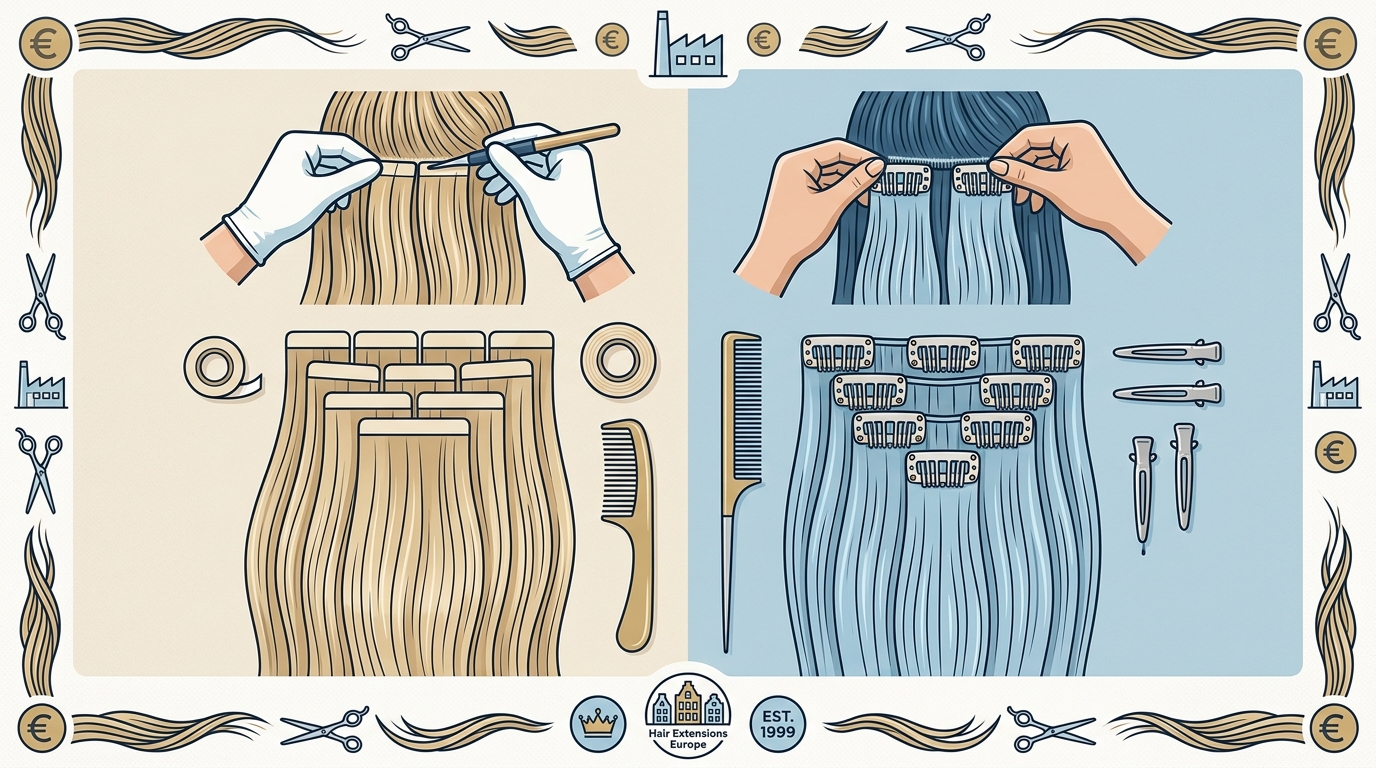
Application methods differ drastically between the two systems. Tape-in extensions require a professional installation to ensure the bonds are placed correctly. The stylist must section the hair precisely and sandwich the natural hair evenly to prevent slippage or discomfort. Removal also requires a professional to apply a solvent that dissolves the adhesive safely. Attempting to remove tape-ins at home can result in significant hair damage.
Clip-in extensions are designed for DIY application. You can part your hair horizontally and clip the wefts close to the roots, working your way up the head. The key to a natural look is varying the placement of the clips and ensuring they are hidden by your natural hair. Removal is as simple as unclipping the wefts and storing them in their provided pouch.
The flexibility of clip-ins allows for creative styling. You can add volume only at the crown, length at the back, or highlights around the face. Tape-ins provide a more uniform distribution of hair, which is ideal for adding overall thickness and length. Choosing the right color is crucial for both methods to ensure a seamless blend.
Cost Analysis
When comparing costs, it is essential to look at the total cost of ownership. Tape-in extensions have a higher upfront cost due to the price of the hair and the professional installation fee. Additionally, you will incur recurring costs for move-up appointments every six to eight weeks. Over a year, this can amount to a significant investment.
Clip-in extensions have a lower initial cost. You pay for the hair and the clips, but there are no professional fees for application or removal. While you may need to replace the set every few years depending on usage, the overall expenditure is often lower than that of semi-permanent methods. For budget-conscious consumers, clip-ins offer a cost-effective way to experiment with different looks.
Both options are available at Hair Extensions Europe with competitive pricing. The company offers various price ranges to suit different budgets, ensuring that high-quality 100% natural hair is accessible to all customers. Consider your lifestyle and frequency of use when deciding which option provides the best value for your needs.
Key Takeaways
- Tape-in extensions are semi-permanent and last 6-8 weeks, requiring professional maintenance.
- Clip-in extensions are temporary and can be applied and removed in minutes for instant styling.
- Tape-ins offer a more undetectable finish, while clip-ins provide greater versatility and control.
- Both methods require 100% natural human hair for the best quality and longevity.
- Proper care products, such as sulfate-free shampoos, are essential for maintaining tape-in bonds.
- Clip-ins are ideal for occasional use, while tape-ins are better for long-term wear.
- Hair Extensions Europe offers a wide range of both types with international shipping from Amsterdam.
Frequently Asked Questions
Can I sleep with tape-in extensions?
Yes, you can sleep with tape-in extensions. However, it is recommended to braid your hair loosely or tie it in a low ponytail to prevent tangling and reduce stress on the adhesive bonds.
How do I remove clip-in extensions safely?
To remove clip-in extensions safely, hold the base of the weft and gently unclip the metal clasps. Do not pull the extensions out of your hair, as this can cause breakage. Always store them in a dry, clean place after removal.
Are tape-in extensions damaging to natural hair?
When applied and removed by a professional, tape-in extensions are not damaging. The key is to use the correct solvent for removal and to avoid leaving the extensions in for too long, which can lead to matting.
Can I color clip-in extensions?
Yes, you can color clip-in extensions, but it is best to do so with professional help. Since the hair is 100% natural, it reacts to dye just like your own hair. However, frequent coloring can dry out the hair, so limit this process.
Which is better for fine hair?
Tape-in extensions are often recommended for fine hair because they lie flat against the scalp and are lightweight. Clip-ins can also be used, but they must be placed carefully to avoid visible bumps or excessive tension on the delicate hair shaft.
How often should I wash tape-in extensions?
You should wash tape-in extensions every two to three days, or as needed. Use a sulfate-free shampoo and avoid applying conditioner directly to the adhesive bonds. Always dry the roots thoroughly after washing.
Where are Hair Extensions Europe products shipped from?
Hair Extensions Europe ships its products from Amsterdam by registered mail, ensuring safe and timely delivery to customers across Europe and internationally.
Shop Now
Whether you choose the longevity of tape-in extensions or the versatility of clip-ins, Hair Extensions Europe provides the highest quality 100% natural hair solutions. Explore our extensive collection of pre-bonded, weft, and clip-in extensions to find the perfect match for your style. Order before 15:00 for same-day dispatch and experience the difference of premium European hair care.