

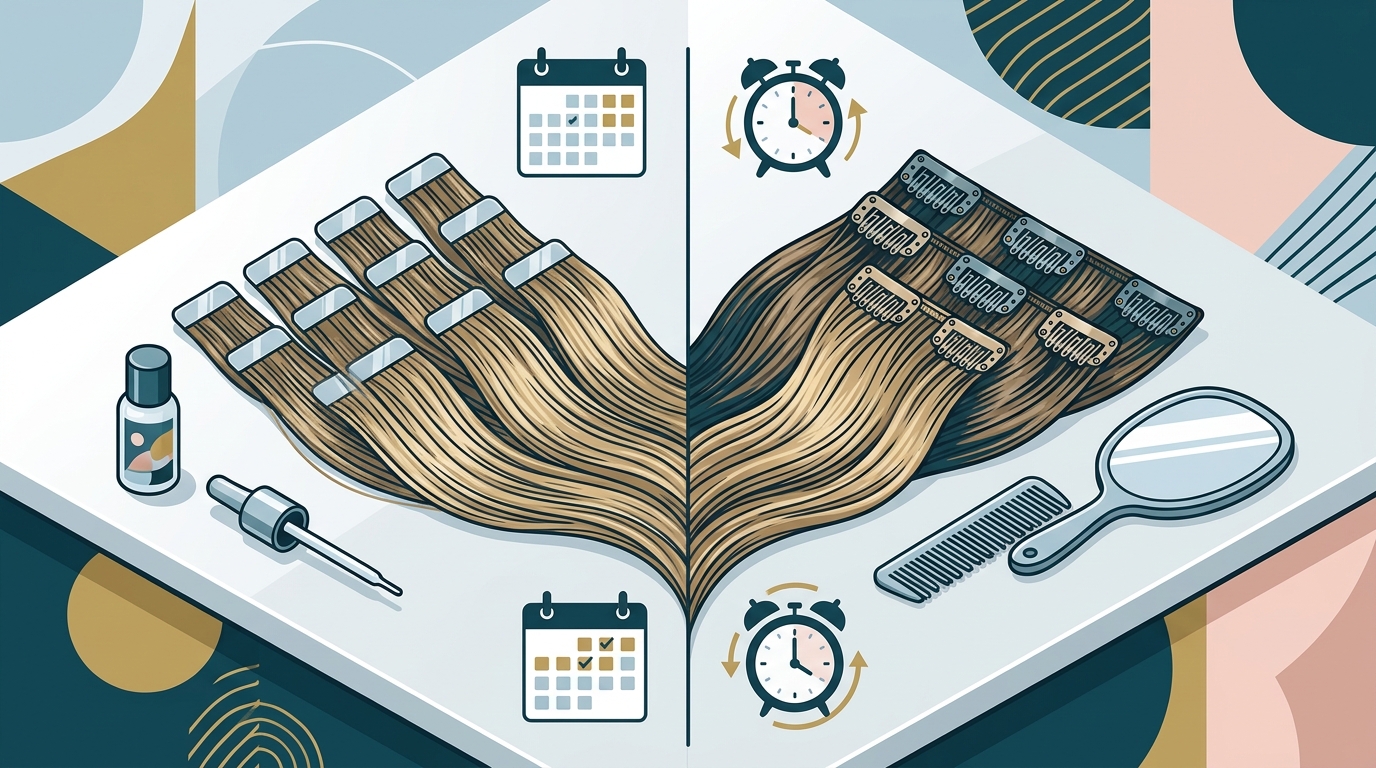
Choosing the right hair extension method is critical for maintaining hair health and achieving your desired aesthetic. Tape-in extensions are semi-permanent strands attached with medical-grade adhesive, while clip-in extensions are temporary units secured with mechanical clips. The choice depends on your lifestyle, budget, and how long you want the look to last. According to industry data, the global hair extension market is projected to grow significantly, with consumers increasingly seeking versatile solutions that balance convenience with longevity. Understanding the mechanical and chemical differences between these two methods is the first step toward making an informed decision. (Customer Service van goedkoophaar)
Application Method and Process
The most immediate difference lies in how the extensions are applied to your natural hair. Tape-in extensions require a professional installation. A stylist uses a specialized tool to sandwich a thin layer of your natural hair between two wefts of extension hair, which are bonded with a strong, medical-grade adhesive. This process is relatively quick, often taking less than an hour for a full head, but it demands precision to avoid tension on the hair follicles.
In contrast, clip-in extensions are designed for DIY application. These wefts feature small, sturdy combs with silicone-lined clips that snap securely onto your natural hair. You can apply them yourself in minutes, making them ideal for occasional use or special events. The ease of application is a primary driver for their popularity among consumers who prefer flexibility over permanence. For those interested in the specific hardware, Tape-In Extensions offer a seamless blend, while Clip-In Human Extensions provide instant volume without any adhesive.
Duration and Lifespan
Longevity is a major factor in choosing between these two methods. Tape-in extensions are considered semi-permanent. They typically last between six to eight weeks before needing to be moved up or removed. The adhesive gradually weakens due to natural oil production and washing, requiring professional maintenance every six to eight weeks to prevent slippage and damage.
Clip-in extensions, on the other hand, have no fixed lifespan regarding wear time. You can wear them for a day, a weekend, or remove them before sleeping. Their longevity depends on the quality of the hair and how well you care for them when stored. High-quality human hair clip-ins can last for years with proper maintenance. This makes them a more sustainable option for those who do not want a long-term commitment. You can explore our hair extensions catalog to see the variety of lengths and colors available for both types.
Maintenance and Care Requirements
Maintenance routines differ significantly between the two. Tape-in extensions require a specialized care routine. You must use sulfate-free shampoos and conditioners to prevent the adhesive from breaking down prematurely. Brushing must be done gently with a loop brush to avoid tangling at the bonds. Neglecting this care can lead to matting and premature removal.
Clip-in extensions are easier to maintain in terms of daily routine because you remove them before washing your hair. However, the extensions themselves require regular washing and conditioning to keep the hair soft and manageable. You should store them in a dry, clean place to prevent dust accumulation. For optimal care, consider using premium hair care products designed to extend the life of human hair extensions.
Comfort and Weight Distribution
Comfort is subjective but heavily influenced by the attachment method. Tape-in extensions lie flat against the head, making them virtually undetectable and comfortable for most users. The weight is distributed evenly across the weft, reducing tension on individual hair strands. However, if installed incorrectly, they can cause discomfort or headaches.
Clip-in extensions can feel heavier because the clips concentrate weight at specific points. If the clips are too tight, they can cause scalp tenderness. However, because you can remove them at night, your natural hair gets a break from the weight. This is particularly beneficial for those with fine or fragile hair. The accessories section of our site offers tools to help with the safe removal and storage of clip-ins.
Cost Analysis and Value
Cost is often the deciding factor for many consumers. Tape-in extensions have a higher upfront cost due to the price of the hair and the professional installation fee. However, the cost per week of wear is often lower because you wear them continuously for months. Clip-in extensions have a lower initial investment, especially for partial sets, but you may need to replace them more frequently if they are lower quality.
When evaluating value, consider the convenience factor. Clip-ins save you the time and money of regular salon visits for maintenance. For a detailed look at pricing, check our pricing guide for both tape-in and clip-in options. We offer competitive pricing on pre-bonded and other extension types as well.
Comparison Summary
| Feature | Tape-In Extensions | Clip-In Extensions |
|---|---|---|
| Application | Professional Installation | DIY / At-Home |
| Lifespan | 6-8 Weeks (with maintenance) | Indefinite (with care) |
| Convenience | Low (Salon Visits Required) | High (Instant On/Off) |
| Damage Risk | Low (if maintained correctly) | Low (when removed nightly) |
| Cost | Higher Upfront Cost | Lower Initial Investment |
Key Takeaways
- Application: Tape-ins require a stylist, while clip-ins are designed for self-application.
- Longevity: Tape-ins last 6-8 weeks per set, while clip-ins can last for years.
- Maintenance: Tape-ins need sulfate-free products and regular salon visits.
- Flexibility: Clip-ins allow you to change your look daily without commitment.
- Cost: Tape-ins have higher initial costs but offer continuous wear.
- Quality: Both types are available in 100% natural human hair at Hair Extensions Europe.
- Shipping: We offer international shipping from Amsterdam for all extension types.
Frequently Asked Questions
Can I swim with tape-in extensions?
Yes, you can swim with tape-in extensions, but you should rinse them with fresh water immediately after exposure to chlorine or saltwater to prevent the adhesive from degrading.
Do clip-in extensions damage natural hair?
When used correctly and removed gently, clip-in extensions do not damage natural hair. The key is to avoid sleeping in them and to ensure the clips are not too tight.
How often should I move up my tape-ins?
Most stylists recommend moving up tape-in extensions every six to eight weeks to maintain a secure hold and prevent tangling at the roots.
Can I color clip-in extensions?
Yes, high-quality human hair clip-ins can be colored, but it is best to have a professional stylist do it to avoid damaging the hair cuticles.
Are tape-in extensions suitable for fine hair?
Tape-in extensions can be suitable for fine hair if installed with the correct weight and adhesive strength. A professional assessment is crucial to prevent slippage.
What is the best shampoo for tape-in extensions?
You should use a sulfate-free and alcohol-free shampoo to preserve the adhesive bond and keep the hair soft and manageable.
How do I store clip-in extensions?
Store clip-in extensions in a dry, cool place, ideally in their original packaging or a silk pouch, to prevent tangling and dust accumulation.
Shop Premium Extensions
Whether you choose the convenience of clip-ins or the longevity of tape-ins, Hair Extensions Europe offers premium quality hair at affordable prices. Our extensive catalog includes clip-in human extensions and tape-in extensions in various lengths and colors. Order before 15:00 for same-day dispatch and experience the difference of 100% natural hair. Visit our contact page for personalized advice.