

Hair extensions have evolved from a niche salon service to a daily beauty staple for millions. Hair Extensions Europe reports that the global hair extension market is projected to reach significant valuation milestones in the coming years, driven by the demand for versatile, non-permanent styling solutions. Understanding the mechanical and aesthetic differences between application methods is critical for maintaining hair health and achieving desired volume. This guide dissects the two most popular options: tape-in and clip-in extensions.
Defining Core Extension Concepts
To make an informed decision, one must first understand the fundamental nature of each product type. These definitions establish the baseline for all subsequent comparisons regarding usage and care. (Contact page of Hair)
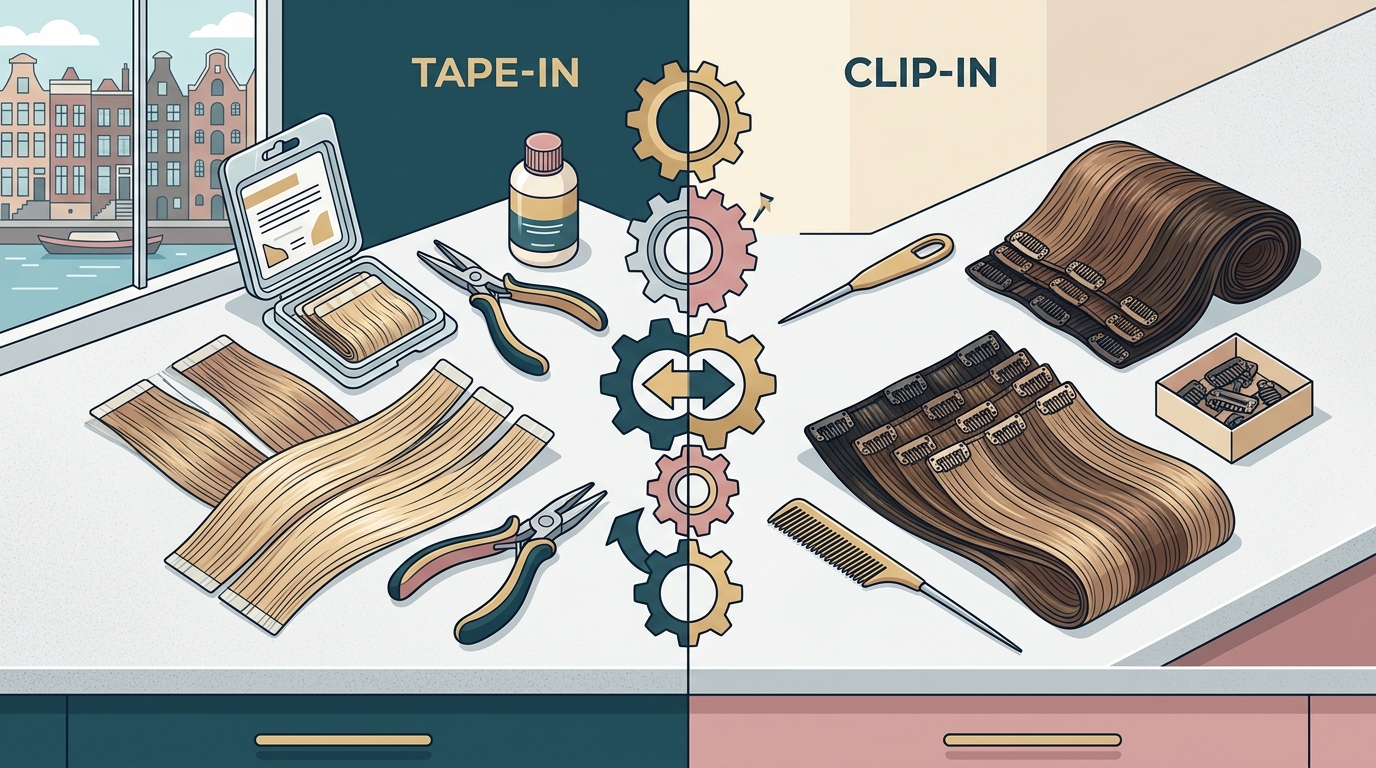
Tape-in extensions are thin, flat wefts of human hair with a medical-grade adhesive strip on one side, designed to sandwich natural hair between two panels for a seamless, flat lay. This method creates a nearly invisible bond that lies flat against the scalp, making it ideal for fine hair textures that require volume without bulk. (Customer Service van goedkoophaar)
Clip-in extensions are temporary hair pieces featuring small, secure metal clips attached to the base, allowing users to attach and remove them daily without professional assistance. This category offers maximum flexibility, enabling users to wear extensions for special events or remove them every night to protect their natural hair from stress.
The primary distinction lies in permanence versus versatility. Tape-ins are semi-permanent, staying in place for weeks. Clip-ins are temporary, offering on-demand styling power. Both methods utilize 100% natural human hair, ensuring that the final result looks and feels authentic.
Application Mechanics and Process
The application process is often the deciding factor for consumers weighing convenience against longevity. The mechanics of each method dictate the daily routine and the required skill level.
Tape-In Application
Tape-in extensions require a professional installation to ensure the adhesive bonds correctly and the hair lies flat. A stylist will section the natural hair and sandwich it between two tape wefts. This process is relatively quick, often taking less than an hour for a full head. The result is a secure bond that can withstand daily activities, including swimming and exercise, provided proper care is taken.
Clip-In Application
Clip-in extensions are designed for DIY application. Users can part their hair, clip the wefts into place, and blend them seamlessly in minutes. This method is entirely reversible. You can remove them before sleeping, showering, or exercising. This flexibility is a major advantage for those who prefer not to have anything attached to their hair for extended periods.
Durability and Longevity
Longevity is a critical metric when comparing investment value. The lifespan of extensions depends on the quality of the hair and the frequency of maintenance.
Tape-in extensions typically last between six to eight weeks before needing a move-up appointment. During this time, the adhesive weakens as natural hair grows. However, the hair wefts themselves can be reused multiple times if cleaned and re-taped by a professional. This makes tape-ins a cost-effective option over the long term for those who wear them continuously.
Clip-in extensions, when cared for properly, can last for years. Because they are removed daily, they do not undergo the same stress from natural hair growth or adhesive breakdown. The limiting factor is usually the wear and tear on the clips themselves. High-quality clips, such as those found in premium sets from Hair Extensions Europe, are designed to withstand repeated use without losing their grip.
Maintenance and Hair Care
Maintenance routines differ significantly between the two types. Understanding these requirements is essential for preserving the integrity of both the extensions and your natural hair.
Tape-in extensions require specialized care. You must avoid applying conditioner or oil directly to the tape tabs, as this can cause slippage. Regular brushing with a loop brush is necessary to prevent tangling at the bonds. Move-up appointments are mandatory every six to eight weeks to maintain the health of your natural hair and the appearance of the extensions.
Clip-in extensions are easier to maintain in terms of daily routine. You can wash and condition them separately from your natural hair, treating them like a high-quality wig. They require no professional appointments for installation or removal. However, you must ensure they are completely dry before storing them to prevent mold or mildew growth.
Cost Analysis and Value
Cost is not just about the initial purchase price. It includes installation fees, maintenance appointments, and the lifespan of the product.
Tape-in extensions have a higher upfront cost due to the price of the hair and the professional installation fee. However, the ability to reuse the hair for multiple move-ups can offset this cost over time. For individuals who wear extensions daily, tape-ins offer a consistent look with less daily effort.
Clip-in extensions have a lower initial investment. You pay for the hair and the clips, with no installation fees. This makes them accessible to a wider audience. For those who only wear extensions occasionally, clip-ins provide the best value. You can invest in high-quality hair without the recurring cost of salon visits.
Detailed Comparison Table
The following table summarizes the key differences to help you make a quick decision.
| Feature | Tape-In Extensions | Clip-In Extensions |
|---|---|---|
| Duration | Semi-permanent (6-8 weeks) | Temporary (Daily removal) |
| Application | Professional installation required | DIY, takes minutes |
| Visibility | Flat, nearly invisible bonds | Visible clips if not blended well |
| Hair Health | Low tension, but requires move-ups | Zero tension when removed |
| Best For | Daily wear, fine hair | Occasional use, versatility |
| Maintenance | Specialized shampoos, professional care | Standard washing, air drying |
Key Takeaways
- Tape-in extensions offer a seamless, flat look that is ideal for daily wear and fine hair textures.
- Clip-in extensions provide maximum flexibility and allow for zero tension on the natural hair when removed.
- Tape-ins require professional move-up appointments every six to eight weeks to maintain hair health.
- Clip-ins can last for years with proper care, offering a lower long-term cost for occasional users.
- Both methods utilize 100% natural human hair, ensuring authentic styling and blending capabilities.
- Proper maintenance, including specialized shampoos for tape-ins and careful washing for clip-ins, is essential for longevity.
- Hair Extensions Europe offers a wide range of both tape-in and clip-in options to suit different needs and budgets.
Frequently Asked Questions
Can I swim with tape-in extensions?
Yes, you can swim with tape-in extensions. However, you should rinse them with fresh water immediately after swimming to remove chlorine or salt, which can dry out the hair and weaken the adhesive over time.
Do clip-in extensions damage natural hair?
When used correctly, clip-in extensions do not damage natural hair. The key is to avoid clipping onto wet hair and to ensure the clips are not too tight. Removing them gently before sleeping is also crucial.
How long do tape-in extensions last?
Tape-in extensions typically last between six to eight weeks before needing a move-up appointment. The hair itself can be reused multiple times with proper professional maintenance.
Which is better for fine hair?
Tape-in extensions are often recommended for fine hair because they lie flat against the scalp and are less likely to slip or cause bulkiness compared to thicker clip-in wefts.
Can I dye my hair extensions?
Yes, both tape-in and clip-in extensions made from 100% human hair can be dyed. However, it is best to have this done by a professional to avoid damaging the hair cuticles or the adhesive bonds.
Are tape-in extensions painful?
No, tape-in extensions should not be painful. They are designed to lay flat against the head. If you experience discomfort, it may indicate that the bonds are too close to the scalp or that the hair is tangled.
How do I choose the right color?
Choosing the right color involves matching your natural hair in natural lighting. Hair Extensions Europe provides detailed color charts and guides to help you find the perfect match for your skin tone and hair color.
Shop Premium Extensions
Whether you choose the seamless longevity of tape-ins or the versatile convenience of clip-ins, quality matters. Explore the full range of premium human hair extensions at Hair Extensions Europe. Order before 15:00 for same-day dispatch and experience the difference of professional-grade hair care.