

Hair extension technology has evolved significantly, offering consumers unprecedented control over volume and length. According to recent industry data, the global hair extension market is projected to reach a valuation of over $1 billion by 2026, driven largely by the demand for semi-permanent and temporary styling solutions. Understanding the mechanical and aesthetic differences between tape-in and clip-in extensions is critical for making an informed purchase. This guide breaks down the structural, maintenance, and longevity differences to help you choose the right option for your lifestyle. (Contact page of Hair)
Definition and Mechanics
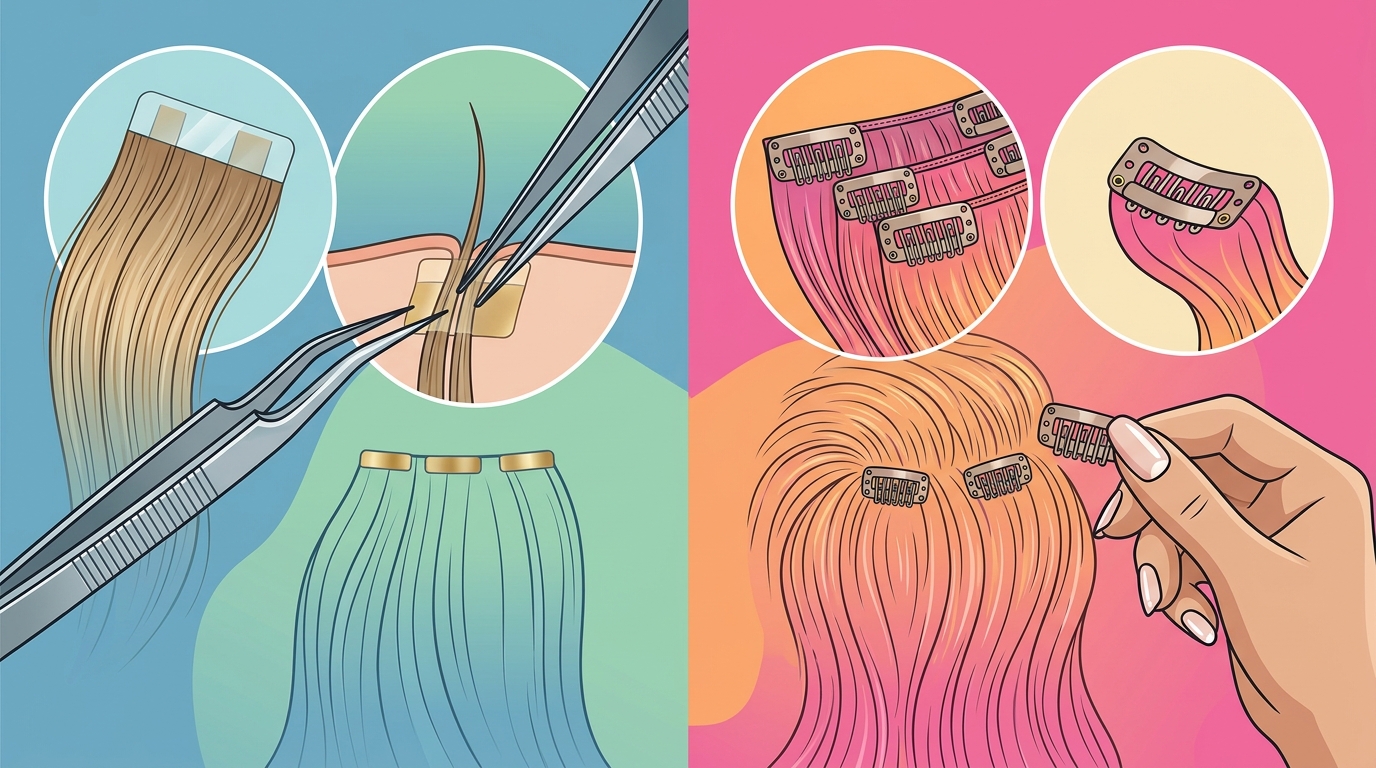
To understand the core difference, we must first define the fundamental nature of each extension type. Tape-in extensions are thin, wefted strands of human hair with a medical-grade adhesive tape running across the top. This adhesive allows the weft to sandwich a thin layer of your natural hair, creating a flat, secure bond that lies close to the scalp. This method is designed for semi-permanent wear, typically lasting between six to eight weeks before requiring removal and reapplication.
Clip-in extensions, by contrast, are temporary styling tools. Each weft is attached to a small, sturdy metal or plastic clip mechanism. These clips snap open and closed, gripping your natural hair through friction and tension rather than adhesive. This design allows for immediate removal at the end of the day. The primary advantage here is versatility. You can wear them for a special event and remove them immediately after, protecting your natural hair from prolonged stress.
The structural difference dictates the wear pattern. Tape-ins offer a seamless, undetectable finish because the adhesive is flat. Clip-ins, while improving in technology, still require careful placement to remain invisible, often necessitating a layer of natural hair to be placed over the clips for concealment.
Application and Removal Process
The daily routine difference is the most significant factor for many users. Tape-in extensions require professional installation for the first time. A stylist uses a specialized tool to place the wefts in a grid pattern, ensuring even weight distribution. While you can learn to apply them yourself, the precision required to avoid slippage or visible gaps makes professional help highly recommended. Removal also requires a specialized solvent to dissolve the adhesive without damaging your natural hair.
Clip-in extensions are designed for DIY application. You can apply them in under five minutes. The process involves sectioning your hair, clipping the wefts in from the nape upwards, and then styling. Removal is equally simple. You just unclip them and store them. This makes clip-ins ideal for individuals who travel frequently or want to change their look daily without committing to a long-term bond.
However, the ease of clip-in application comes with a caveat. If applied incorrectly, the clips can slip or cause traction alopecia if the tension is too tight. Tape-ins, once professionally applied, are generally more secure during physical activities like swimming or intense workouts, provided they are maintained correctly.
Durability and Lifespan
Longevity is a major differentiator. High-quality tape-in extensions, when maintained with the right products, can last for six to eight weeks before needing to be moved up. The hair itself can last for one to two years with proper care and regular repositioning. This makes them a cost-effective option for those who want consistent volume and length without daily effort.
Clip-in extensions are durable in terms of the hair quality but are subject to wear from the clip mechanism. The clips can loosen over time, or the weft can detach if pulled aggressively. With proper care, the hair can last for several years, but the mechanical components may need replacement sooner. The lifespan of the hair is directly related to how often you wash and style them. Since they are removed daily, they are exposed to more environmental factors and styling heat than tape-ins, which are worn continuously.
According to hair care experts, the frequency of washing affects the adhesive in tape-ins. Over-washing can cause the tape to lose its grip, necessitating more frequent salon visits. Clip-ins, being removable, can be washed less frequently in the context of your daily routine, but when you do wash them, you must treat them with the same care as your natural hair.
Maintenance and Care Requirements
Maintenance for tape-ins is rigorous. You must use sulfate-free shampoos and conditioners. Sulfates break down the adhesive, causing the extensions to slip. You also need to brush them daily with a loop brush to prevent tangling at the bond. Sleeping with them in requires braiding your hair to prevent friction. If you neglect this care, the extensions can mat, leading to hair loss and expensive salon repairs.
Clip-ins require less daily maintenance but demand careful storage. After removal, you must brush them out and store them in a silk pouch or their original case to prevent tangling. Washing them is straightforward since you can control the environment completely. You can use any high-quality hair care product without worrying about damaging an adhesive bond. This makes clip-ins a more forgiving option for those who are not diligent about daily hair care routines.
The care for the hair itself is similar for both. You must use heat protectants and avoid excessive heat styling. Both types of extensions are made from 100% natural human hair, as seen in our premium collection, which means they react to heat and chemical treatments just like your natural hair.
Cost Analysis and Value
When comparing costs, you must look at both the initial investment and the long-term expenses. Tape-ins have a higher upfront cost due to the price of the hair and the professional installation fee. You will also need to pay for maintenance appointments every six to eight weeks. However, the daily convenience and consistent look often justify the expense for many users.
Clip-ins have a lower initial cost. You buy the hair and apply it yourself. There are no salon fees for installation or maintenance. However, you may need to replace the clips or the wefts more frequently if they wear out. For budget-conscious consumers, clip-ins offer a lower barrier to entry while still providing the luxury of human hair.
Consider the value of your time. If you spend 30 minutes every morning styling your hair, tape-ins can save you that time. If you prefer to wake up with your natural hair and only add extensions for special occasions, clip-ins provide better value by allowing you to pay only for the hair, not the daily labor.
| Feature | Tape-In Extensions | Clip-In Extensions |
|---|---|---|
| Application Time | 60-90 minutes (Professional) | Under 5 minutes (DIY) |
| Lifespan | 6-8 weeks per set (moved up) | Several years (with care) |
| Maintenance | High (Sulfate-free products required) | Low (Remove and store) |
| Cost | Higher (Hair + Salon Fees) | Lower (Hair Only) |
| Best For | Consistent volume and length | Occasional use and versatility |
Key Takeaways
- Adhesive vs. Mechanical Bond: Tape-ins use a medical-grade adhesive for a semi-permanent hold, while clip-ins use mechanical clips for temporary attachment.
- Professional vs. DIY: Tape-ins generally require professional installation and maintenance, whereas clip-ins are designed for easy at-home application.
- Lifespan: Tape-ins last 6-8 weeks before needing repositioning, while clip-ins can last for years if stored correctly.
- Maintenance: Tape-ins require strict sulfate-free care routines to preserve the adhesive bond.
- Cost: Clip-ins have a lower initial cost and no salon fees, making them more budget-friendly for occasional use.
- Versatility: Clip-ins allow for daily style changes, while tape-ins provide a consistent, seamless look.
- Hair Health: Both types are safe if used correctly, but improper removal of tape-ins can cause damage.
Frequently Asked Questions
Can I swim with tape-in extensions?
Yes, you can swim with tape-in extensions. However, you should rinse them with fresh water immediately after swimming to remove chlorine or salt, which can dry out the hair and weaken the adhesive. Braiding your hair before swimming also helps prevent tangling.
Are clip-in extensions damaging to natural hair?
Clip-in extensions are generally safe and cause less damage than semi-permanent methods because they are removed daily. However, if they are clipped too tightly or pulled out roughly, they can cause breakage. Always ensure your hair is dry and detangled before applying clips.
How long do tape-in extensions last?
Tape-in extensions typically last between six to eight weeks before the adhesive begins to slip and the wefts need to be moved up closer to the scalp. The hair itself can last for one to two years with proper care.
Can I use regular shampoo on tape-in extensions?
No, you must use sulfate-free shampoo. Sulfates are harsh detergents that break down the adhesive bond, causing the extensions to slip out prematurely. Using the right products is essential for maintaining the integrity of the bond.
Which is better for fine hair?
Clip-in extensions are often recommended for fine hair because they do not put constant tension on the hair follicles. Tape-ins can also be used on fine hair, but they must be applied with a lighter weight weft and by a professional who understands fine hair dynamics.
Do I need to buy a special brush for tape-ins?
Yes, it is highly recommended to use a loop brush or a specialized extension brush. These brushes have flexible bristles that glide through the hair without pulling on the adhesive tape, preventing tangles and matting at the bonds.
Can I dye both tape-in and clip-in extensions?
Yes, since both are made from 100% natural human hair, they can be dyed. However, it is best to have a professional colorist perform the service to ensure the color matches your natural hair and to prevent damage from excessive chemical processing.
Shop Now
Ready to transform your look? Whether you choose the convenience of clip-ins or the seamless elegance of tape-ins, Hair Extensions Europe offers premium 100% natural hair at affordable prices. Explore our Tape-In Extensions and Clip-In Human Extensions today. Order before 15:00 for same-day dispatch from Amsterdam. Visit our Customer Service page for more details on shipping and care.