

Hair extensions have evolved from a niche salon service to a daily beauty staple for millions of women worldwide. According to recent market analysis, the global hair extension market is projected to reach significant valuation milestones by 2026, driven largely by the demand for versatile, at-home styling solutions. Market trends indicate that consumers are increasingly prioritizing convenience and cost-effectiveness without sacrificing the natural look of premium human hair. This shift has placed two specific methods at the forefront of consumer consideration: tape-in and clip-in extensions. While both offer immediate volume and length, their application methods, longevity, and maintenance requirements differ fundamentally. Understanding these distinctions is critical for selecting the right product for your lifestyle and hair type. (Contact page of Hair)
Defining Tape-In and Clip-In Extensions
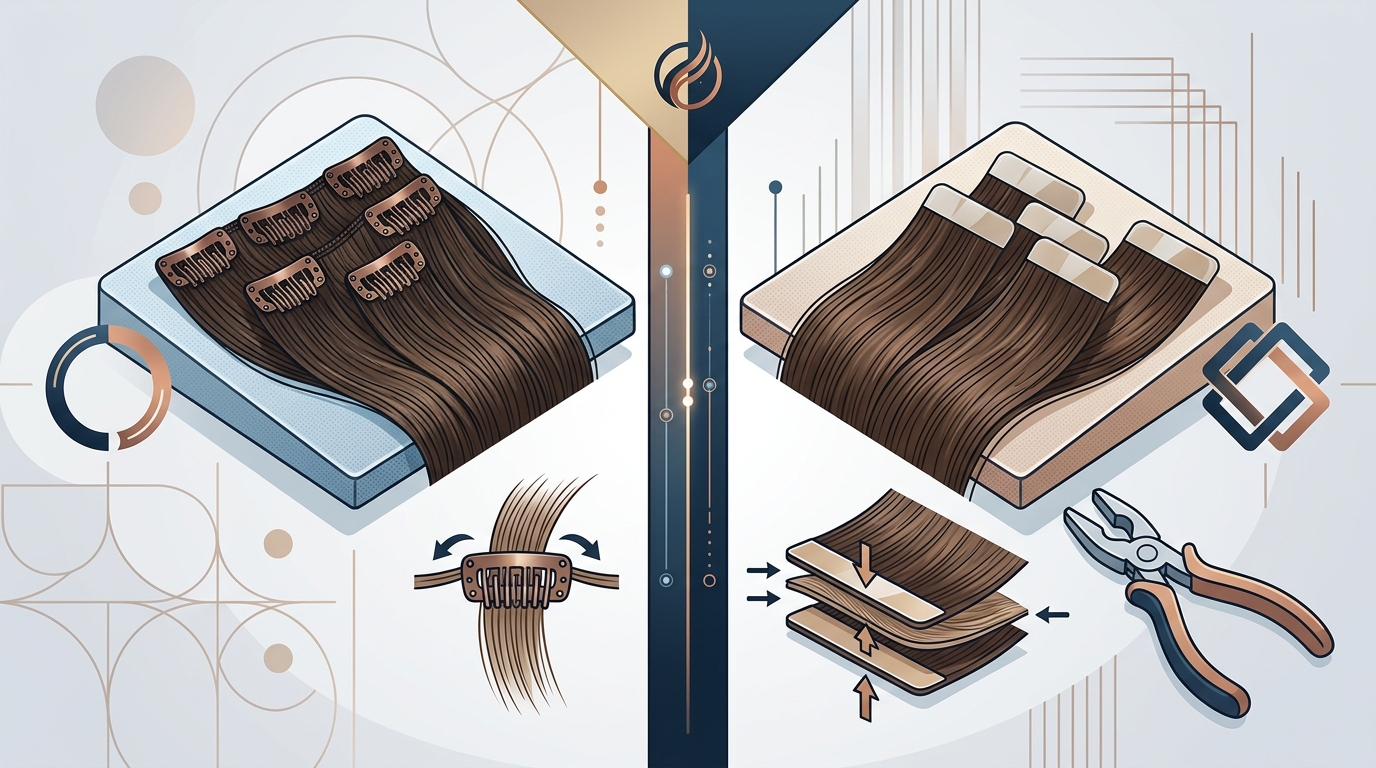
To make an informed decision, one must first understand the structural mechanics of each extension type. Tape-in extensions are thin, flat wefts of human hair with a medical-grade adhesive strip on one side. These are designed to be sandwiched between layers of your natural hair, creating a seamless, flat profile that lies close to the scalp. This method is widely regarded as one of the most natural-looking semi-permanent options available. (Customer Service van goedkoophaar)
Conversely, clip-in extensions are temporary wefts of hair attached to small, pressure-sensitive clips. These clips snap onto the natural hair near the roots, allowing for complete removal at the end of the day. This category includes various styles, such as clip-in party hair sets, which are specifically curated for special occasions. The fundamental difference lies in permanence: tape-ins are semi-permanent, while clip-ins are strictly temporary. (Hair Extensions Europe best)
Application and Removal Process
The application process is often the deciding factor for users balancing time constraints with styling goals. Tape-in extensions require a professional installation or a high degree of skill for self-application. The stylist or user must section the hair precisely and sandwich the natural hair between two tape-in wefts. This process can take between 45 to 90 minutes depending on the density desired. Removal also requires a specialized solvent to dissolve the adhesive safely, ensuring no damage occurs to the natural hair shaft. (Hair Extensions Europe best)
Clip-in extensions offer immediate gratification with a significantly faster application time. A user can typically apply a full set of clip-in human extensions in under five minutes. The process involves sectioning the hair at the nape of the neck and snapping the clips into place, working upwards. Removal is equally instantaneous, requiring no solvents or professional assistance. This makes clip-ins ideal for individuals who wish to wear extensions only for specific events or days of the week.
Longevity and Maintenance Requirements
Longevity is a primary differentiator between these two categories. High-quality tape-in extensions, when maintained correctly, can last between six to eight weeks before requiring a move-up appointment. This move-up process involves removing the old wefts, cleaning the adhesive, and reapplying new wefts closer to the scalp as the natural hair grows. With proper care, the hair itself can be reused for multiple cycles, making it a long-term investment.
Clip-in extensions, if cared for properly, can last for years. However, the clips themselves may lose their tension over time, particularly if removed aggressively. Maintenance for clip-ins involves washing and conditioning them separately from natural hair, similar to how one would care for a high-quality wig. Proper hair care routines are essential for both types to prevent tangling and matting, but the frequency of washing for tape-ins is generally lower due to their proximity to the scalp oils.
Impact on Natural Hair Health
The health of your natural hair is paramount when choosing an extension method. Tape-in extensions distribute weight evenly across a wide surface area, which reduces tension on individual hair strands. This makes them a safer option for long-term wear compared to methods that pull on single strands, such as micro-links. However, improper removal or leaving tape-ins in for too long can lead to adhesive residue buildup and potential breakage.
Clip-in extensions are generally considered the safest option for hair health because they are not worn continuously. They do not expose the hair to adhesives, heat, or chemical treatments required for semi-permanent methods. This allows the natural hair and scalp to rest and breathe when the extensions are removed. For individuals with fine or fragile hair, clip-in extensions provide volume without the constant stress of permanent attachment.
Cost Analysis and Value
Cost considerations extend beyond the initial purchase price. Tape-in extensions typically have a higher upfront cost due to the price of the hair and the professional installation fees. However, the ability to reuse the hair for multiple installation cycles can offset this cost over time. Users must also budget for regular move-up appointments every six to eight weeks.
Clip-in extensions have a lower initial barrier to entry. A high-quality set of 100% natural hair clip-ins can provide a salon-quality look for a fraction of the cost of a full head of tape-ins. Since there are no installation or maintenance fees, the total cost of ownership is significantly lower for occasional users. This makes clip-ins an attractive option for those on a budget or those who prefer variety in their styling.
Detailed Comparison Summary
The following table summarizes the critical differences between tape-in and clip-in extensions to aid in your decision-making process.
| Feature | Tape-In Extensions | Clip-In Extensions |
|---|---|---|
| Duration | Semi-permanent (6-8 weeks) | Temporary (Daily removal) |
| Application Time | 45-90 minutes | Under 5 minutes |
| Professional Help | Required for installation/removal | Not required |
| Hair Health Impact | Low tension, but adhesive risk | Minimal risk, no constant wear |
| Cost | Higher initial and maintenance cost | Lower initial cost, no maintenance fees |
| Best For | Long-term volume and seamless look | Occasional use and styling variety |
Key Takeaways
- Tape-in extensions offer a seamless, natural look that lasts for weeks, requiring professional maintenance every six to eight weeks.
- Clip-in extensions provide instant volume and length with the flexibility of daily removal, making them ideal for occasional wear.
- Hair health is generally better preserved with clip-ins due to the absence of constant tension and adhesive exposure.
- Cost efficiency favors clip-ins for occasional users, while tape-ins may offer better value for those seeking long-term consistency.
- Application speed is a major advantage for clip-ins, which can be applied in under five minutes without professional help.
- Quality matters for both types; premium human hair ensures durability and a natural appearance for either choice.
- Maintenance for tape-ins involves regular move-up appointments, whereas clip-ins require standard washing and conditioning routines.
Frequently Asked Questions
Can I sleep with tape-in extensions?
Yes, you can sleep with tape-in extensions. However, it is recommended to braid your hair loosely or tie it in a low ponytail to prevent tangling and matting during the night.
How long do clip-in extensions last?
With proper care, high-quality clip-in extensions can last for one to two years or longer. The lifespan depends on the frequency of use and the quality of the hair.
Are tape-in extensions damaging to natural hair?
When applied and removed correctly by a professional, tape-in extensions are not damaging. They distribute weight evenly, reducing stress on individual hair strands compared to other methods.
Can I color clip-in extensions?
Yes, you can color clip-in extensions, but it is best to have them colored by a professional to avoid damaging the hair cuticles. Always use high-quality hair dye suitable for human hair.
What is the difference in weight between tape-in and clip-in?
Tape-in extensions are generally lighter per weft because they are thin and flat. Clip-in extensions can vary in weight depending on the density and length of the set, but they are designed to be comfortable for daily wear.
Do I need to use special shampoo for tape-ins?
Yes, it is recommended to use a sulfate-free shampoo to prevent the adhesive from breaking down too quickly. Avoid applying conditioner directly to the tape tabs to maintain their grip.
Can I swim with tape-in extensions?
Yes, you can swim with tape-in extensions, but it is important to rinse them with fresh water immediately after exposure to chlorine or saltwater to prevent drying and tangling.
Shop Premium Extensions
Whether you choose the semi-permanent elegance of tape-ins or the versatile convenience of clip-ins, the quality of the hair is the most critical factor. Hair Extensions Europe offers a curated selection of 100% natural human hair extensions, ensuring premium quality at affordable prices. Explore our extensive collection today to find the perfect match for your hair type and styling needs. Order before 15:00 for same-day dispatch from Amsterdam.