

Common Mistakes When Buying 100% Human Hair Extensions and How to Avoid Them
Buying 100% human hair extensions is a significant investment in your appearance and confidence. However, the market is flooded with synthetic blends and low-quality processed hair that can ruin your natural locks. According to industry data, over 60% of online hair purchases result in customer dissatisfaction due to misleading product descriptions. This statistic highlights the critical need for informed decision-making before you complete your purchase. You must navigate a complex landscape of textures, origins, and attachment methods to find the right fit. This guide breaks down the most frequent pitfalls buyers encounter and provides actionable strategies to ensure you receive premium quality.
Mistake 1: Ignoring Hair Origin and Quality
One of the most critical errors buyers make is assuming all "100% human hair" is created equal. Not all human hair is suitable for extensions. Virgin hair is unprocessed and retains its natural cuticle alignment. This alignment prevents tangling and matting, which are common issues with processed hair. When the cuticles are stripped or misaligned, the hair becomes dry, brittle, and difficult to style.
Many sellers mix Remy hair with non-Remy hair to lower costs. Remy hair means the cuticles are kept intact and pointing in the same direction. Non-Remy hair has cuticles that face multiple directions, causing immediate friction and tangling. To avoid this mistake, always verify the vendor's sourcing claims. Reputable suppliers like Hair Extensions Europe explicitly state their commitment to 100% natural hair to build trust with discerning customers.
Another factor is the geographic origin. Hair from different regions has distinct structural properties. For example, Asian hair tends to be thicker and straighter, while European hair is often finer and more textured. Understanding these differences helps you select hair that blends seamlessly with your natural hair type. Do not rely solely on the product title. Read the detailed specifications to understand the source and processing level.
Mistake 2: Choosing the Wrong Attachment Method
Selecting an attachment method that does not suit your hair density or lifestyle is a common and costly error. There are several popular methods available, each with specific pros and cons. Pre-bonded extensions use keratin tips that are melted onto your natural hair. They offer a long-lasting hold but require professional removal to prevent damage. Wefts are sewn or glued into braided tracks. They are ideal for adding volume but can be heavy if too many are used.
Clip-in extensions offer temporary versatility. They are perfect for occasional use but require daily application and removal. Tape-in extensions are flat and lie close to the scalp, making them invisible. However, they require frequent maintenance as your hair grows. Micro ring and nano ring extensions use small metal or silicone beads to clamp the hair. They are less damaging than heat methods but can slip if not installed correctly.
To avoid this mistake, assess your daily routine and hair health. If you have fine hair, heavy wefts may cause traction alopecia. If you are active, clip-ins may not stay secure. Consult with a professional stylist to determine the best method for your specific needs. Explore the hair extensions category on Hair Extensions Europe to compare the different types available.
Mistake 3: Overlooking Color Matching
Color mismatch is perhaps the most visible mistake buyers make. Buying extensions that do not match your natural hair color can look unnatural and draw unwanted attention. Many buyers make the error of choosing a color based on a single photo or a screen representation. Screen colors vary significantly across devices, leading to inaccurate expectations.
Another common error is ignoring the multi-dimensional nature of natural hair. Most people have highlights, lowlights, or varying tones throughout their hair. Buying a single, flat color will look artificial. You should aim for a color that matches the mid-lengths and ends of your hair, as the roots are often darker due to new growth. Use the color guide provided by the retailer to get a more accurate representation.
When in doubt, it is better to choose a shade slightly lighter than your natural color. Extensions do not darken over time, but they can be colored darker by a professional. However, you cannot lighten extensions that are already dyed. Always request swatches if possible. This allows you to see the true texture and color in natural lighting before committing to a purchase.
Mistake 4> Neglecting Care and Maintenance
Many buyers underestimate the ongoing care required for human hair extensions. While they are made of real hair, they do not receive natural oils from your scalp. This means they are more prone to dryness and damage if not cared for properly. Using sulfate-containing shampoos can strip the hair of moisture and cause the bonds or tapes to loosen prematurely.
Another mistake is brushing extensions incorrectly. You must start from the ends and work your way up to the roots to prevent pulling and breakage. Using a loop brush or a specialized extension brush is essential. Neglecting to protect the hair while sleeping can also lead to tangling. Braiding your hair or using a silk pillowcase can significantly reduce friction.
Invest in high-quality hair care products. Look for moisturizing shampoos and conditioners designed for extensions. The hair care section at Hair Extensions Europe offers specialized products like the Jenoris Keratin Luxury Gift Set to maintain the health and shine of your extensions. Regular deep conditioning treatments are also necessary to keep the hair soft and manageable.
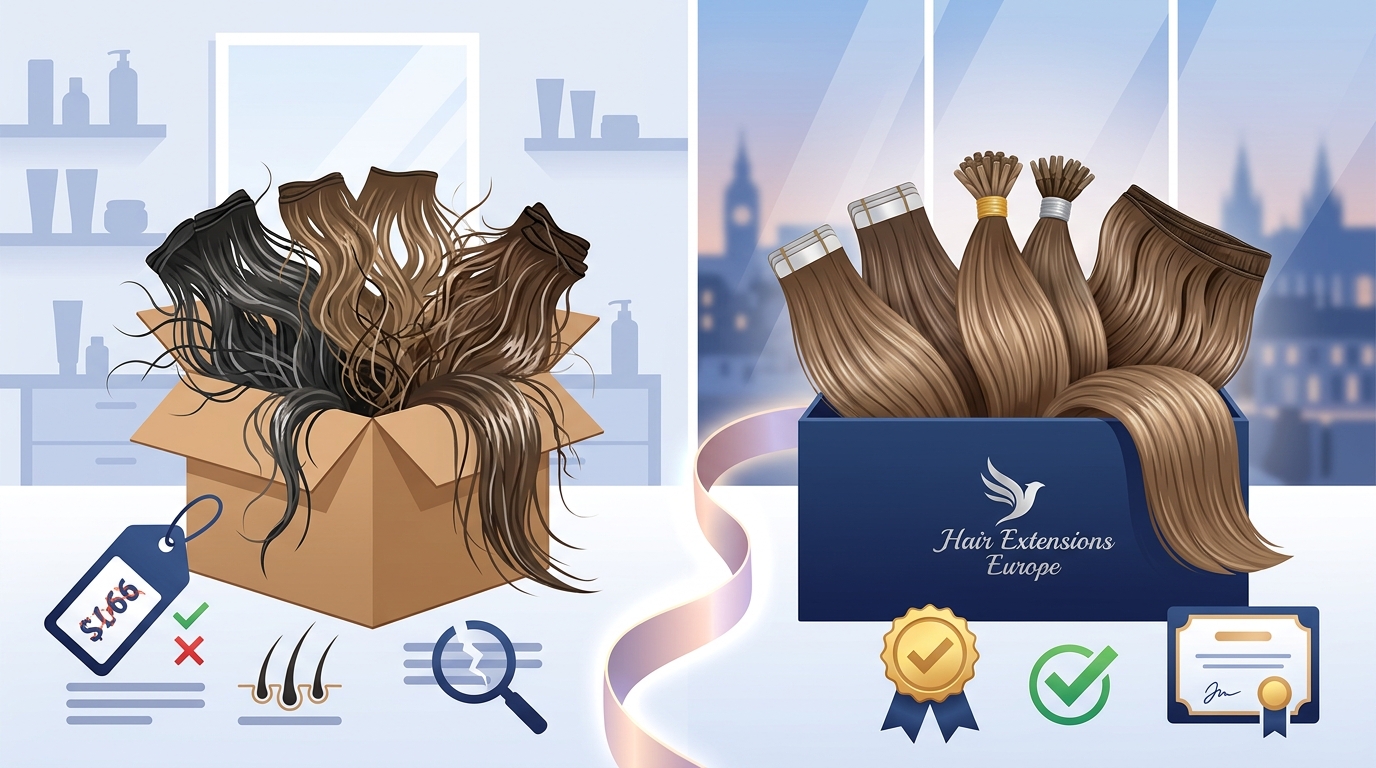
Mistake 5: Skipping the Vendor Reputation Check
The final major mistake is purchasing from unverified or unknown vendors. The internet is filled with sellers who misrepresent their products. They may sell synthetic hair as human hair or use low-quality processed hair. Without a solid reputation, you have no recourse if the product is defective or not as described.
Check for customer reviews and testimonials. Look for detailed feedback regarding the hair's texture, longevity, and customer service. A reputable vendor will have transparent policies regarding returns and exchanges. They will also provide clear information about their shipping and handling. Hair Extensions Europe, for instance, emphasizes customer service and offers international shipping from Amsterdam, ensuring reliability and speed.
Verify the vendor's contact information and physical address. A legitimate business will be easy to reach if issues arise. Avoid sellers who only communicate through anonymous messaging apps. Establishing trust with your supplier is just as important as selecting the right hair. Always prioritize vendors who demonstrate expertise and transparency in their operations.
Comparison of Extension Types
| Extension Type | Lifespan | Maintenance Level | Best For |
|---|---|---|---|
| Pre-Bonded | 3-6 months | High | Long-term wear, natural look |
| Wefts | 6-8 weeks | Medium | Volume, full head coverage |
| Clip-In | Temporary | Low | Occasional use, versatility |
| Tape-In | 6-8 weeks | Medium | Flat, invisible application |
| Micro Ring | 2-4 months | Medium | No heat, less damage |
Key Takeaways
- Always verify that hair is 100% virgin Remy to prevent tangling and matting.
- Choose an attachment method that aligns with your hair density and daily lifestyle.
- Request physical swatches to ensure accurate color matching before purchasing.
- Use sulfate-free products and specialized brushes to maintain extension health.
- Purchase from reputable vendors with transparent customer service policies.
- Understand the maintenance requirements and lifespan of each extension type.
- Invest in high-quality care products like the Jenoris Keratin line for longevity.
Frequently Asked Questions
How do I know if hair extensions are 100% human hair?
Perform a burn test. Real human hair will burn slowly and smell like burning feathers, leaving ash behind. Synthetic hair will melt, smell like plastic, and form a hard bead. Reputable sellers like Hair Extensions Europe guarantee the authenticity of their products.
Can I color my human hair extensions?
Yes, you can color virgin human hair extensions. However, it is best to go to a professional stylist. Darkening the hair is generally safer than lightening it, as lightening can damage the cuticles. Always use high-quality hair dye.
How long do tape-in extensions last?
Tape-in extensions typically last between 6 to 8 weeks before needing to be moved up. This depends on your hair growth rate and the care you provide. Regular maintenance is crucial for a secure hold.
Are clip-in extensions damaging to natural hair?
Clip-in extensions are generally safe if used correctly. Avoid sleeping in them and do not clip them onto wet hair. Give your hair breaks between uses to prevent tension and stress on the follicles.
What is the difference between Remy and non-Remy hair?
Remy hair has cuticles intact and aligned in the same direction. Non-Remy hair has cuticles that are stripped or misaligned. This makes Remy hair tangle-free and longer-lasting compared to non-Remy hair.
How should I store my clip-in extensions?
Store clip-in extensions in a cool, dry place. Use the original packaging or a silk bag to prevent dust and tangling. Keep them away from direct sunlight to preserve the color and texture.
Can I swim with hair extensions?
You can swim with extensions, but you should take precautions. Wet your hair with fresh water before swimming and apply a leave-in conditioner. After swimming, rinse thoroughly with fresh water and shampoo to remove chlorine or salt.
Ready to Upgrade Your Look?
Avoiding these common mistakes ensures you get the best value and results from your hair extension investment. By prioritizing quality, proper care, and reputable sourcing, you can enjoy beautiful, healthy hair. Explore the extensive collection at Hair Extensions Europe to find the perfect extensions for your needs. Visit our contact page for any questions or personalized recommendations.