

The global hair extension market is experiencing a significant shift in consumer preference, with premium quality natural hair becoming the dominant choice for long-term beauty investments. While synthetic options offer immediate accessibility, the long-term value proposition heavily favors 100% human hair for durability and versatility. Understanding the financial and aesthetic differences between these two materials is crucial for making an informed decision that aligns with your lifestyle and budget.
Durability and Lifespan Comparison
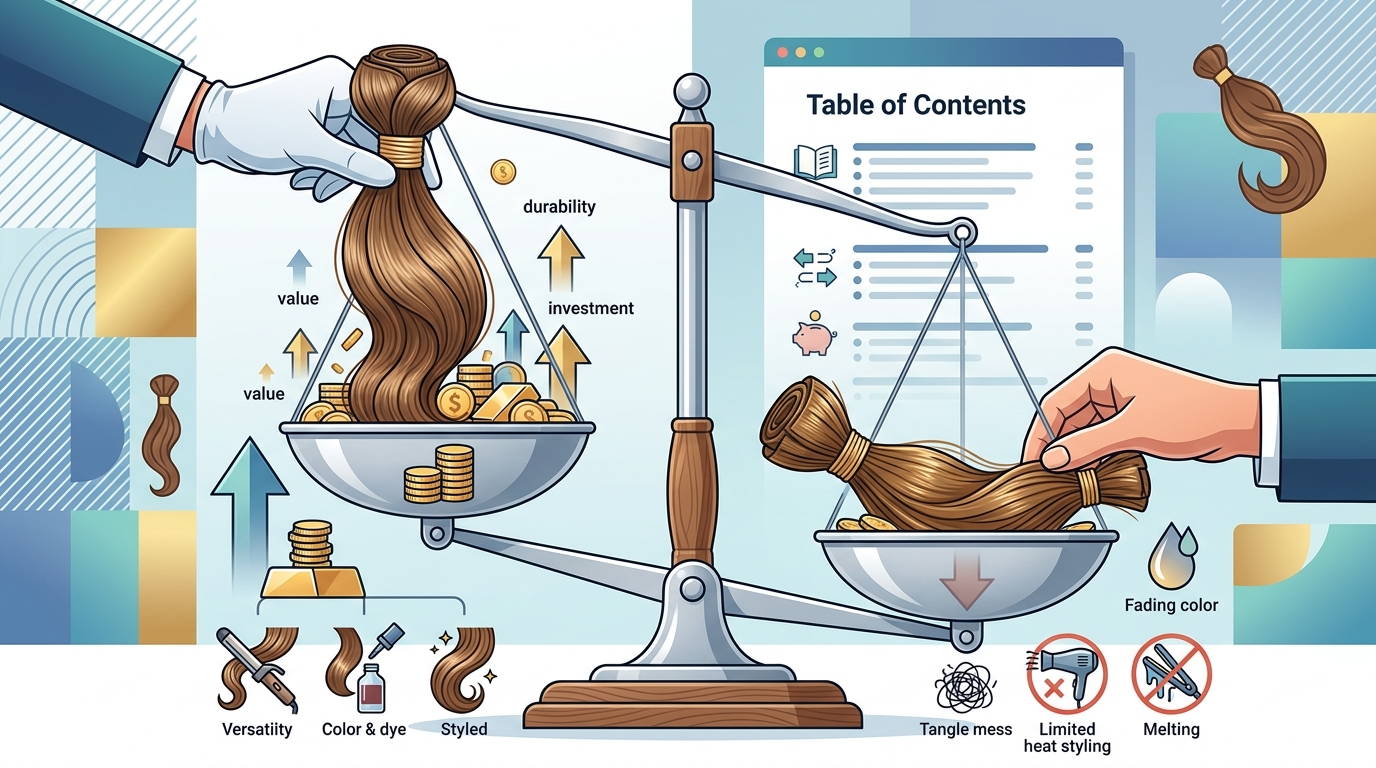
The most immediate difference between human and synthetic hair extensions lies in their structural integrity over time. 100% human hair extensions are composed of cuticle-aligned strands that mimic natural hair growth patterns. This biological structure allows the hair to withstand repeated washing, styling, and environmental exposure without degrading rapidly. In contrast, synthetic fibers are made from modacrylic or polyester blends that are engineered for a specific style. Once that style is lost due to heat or friction, the fiber cannot be restored.
According to industry data, high-quality human hair extensions can last between 12 to 18 months with proper care. This longevity is supported by the fact that the hair remains viable for re-application and restyling. Synthetic extensions, however, typically degrade after 4 to 6 weeks of regular use. The fibers become brittle, tangled, and lose their luster. This stark difference in lifespan makes human hair a more sustainable option for consumers who prioritize consistency in their appearance.
When evaluating durability, it is essential to consider the source of the hair. Hair Extensions Europe sources premium natural hair that retains its cuticle integrity. This ensures that the hair does not mat or tangle excessively, a common issue with lower-grade synthetic alternatives. The structural resilience of human hair allows it to maintain its volume and texture far longer than synthetic counterparts.
Styling Versatility and Heat Resistance
Versatility is a critical factor in the cost-benefit analysis of hair extensions. Human hair offers unlimited styling potential. You can curl, straighten, dye, and bleach human hair extensions just as you would your natural hair. This flexibility allows you to adapt your look for different occasions, from professional settings to evening events. The ability to use heat styling tools without damaging the fibers is a significant advantage.
Synthetic hair, on the other hand, has strict limitations regarding heat. Most standard synthetic fibers cannot withstand temperatures above 180 degrees Celsius. Using heat tools on synthetic hair can cause the fibers to melt, frizz, or become permanently damaged. While heat-friendly synthetic options exist, they still lack the ability to be dyed or bleached. This restriction limits your ability to change your color or style, making synthetic hair a static choice.
The ability to customize human hair extensions means you can achieve a perfect match with your natural hair color. If your hair changes due to seasonal shifts or personal preference, you can easily adjust the extension color. This adaptability reduces the need for frequent replacements, thereby lowering the long-term cost. Synthetic hair comes in fixed colors that may fade or turn brassy over time, requiring complete replacement to maintain a fresh look.
Cost Analysis: Upfront vs. Long-Term
The initial price tag for synthetic hair extensions is significantly lower than that of human hair. A set of synthetic extensions may cost a fraction of the price of a comparable human hair set. This low entry point makes synthetic hair attractive for short-term use, such as for a single event or costume party. However, this upfront savings is often illusory when calculated over time.
When you factor in the frequency of replacement, human hair extensions often prove to be more cost-effective. If you replace synthetic extensions every two months, you will spend more over a year than on a single high-quality human hair set. Additionally, human hair extensions require less frequent salon visits for adjustments if installed correctly. The durability of human hair reduces the cumulative cost of ownership.
Consider the value of the premium quality human hair available at Hair Extensions Europe. The investment in natural hair includes the benefit of reusability. You can remove, clean, and reapply human hair extensions multiple times. This reusability is not possible with synthetic hair, which must be discarded once it loses its shape. Therefore, the cost-per-wear for human hair is substantially lower.
Maintenance and Care Requirements
Maintenance routines differ significantly between the two types of extensions. Human hair requires care similar to natural hair. You must use sulfate-free shampoos and conditioners to preserve the cuticle. Regular deep conditioning treatments are necessary to keep the hair moisturized and prevent dryness. While this may seem like extra work, it is a standard part of hair care that most individuals are already familiar with.
Synthetic hair has different maintenance needs. It requires specialized synthetic hair shampoos and cool water washing. Heat styling is generally prohibited, and brushing must be done gently to avoid pulling out fibers. While synthetic hair may seem easier to care for initially, the lack of durability means that maintenance efforts are often wasted as the hair degrades quickly. Human hair, when cared for properly, maintains its beauty and functionality for much longer.
The availability of hair care products specifically designed for human extensions ensures that your investment is protected. Products like the Jenoris Keratin Luxury Gift Set help maintain the health and shine of natural hair extensions. Using the right products extends the lifespan of the hair, further enhancing the cost-benefit ratio. Neglecting proper care for human hair can lead to tangling and matting, but this is a manageable risk with consistent upkeep.
Aesthetic Quality and Natural Appearance
The visual appeal of hair extensions is a primary driver for purchase. Human hair extensions blend seamlessly with natural hair due to their identical texture and shine. They move and fall naturally, creating a realistic and polished look. Synthetic hair often has an unnatural shine that can look plastic-like under bright lights. This sheen can give away the presence of extensions, which is undesirable for many users.
Human hair extensions also offer a more comfortable wearing experience. They are lighter and less prone to static buildup. The weight distribution of human hair is more even, reducing strain on the natural hair and scalp. Synthetic hair can feel heavier and stiffer, leading to discomfort during extended wear. The aesthetic and physical comfort of human hair make it the superior choice for daily wear.
Color matching is another aspect where human hair excels. You can choose from a wide range of natural shades that match your hair perfectly. Synthetic hair colors are limited and may not match your natural hair tone accurately. The ability to customize color ensures a seamless blend, enhancing the overall aesthetic result. This attention to detail is crucial for achieving a professional and natural appearance.
Detailed Comparison Table
The following table summarizes the key differences between human and synthetic hair extensions to aid in your decision-making process.
| Feature | 100% Human Hair Extensions | Synthetic Hair Extensions |
|---|---|---|
| Lifespan | 12-18 months with care | 4-6 weeks |
| Heat Styling | Yes, fully heat resistant | No, or limited heat-friendly only |
| Color Customization | Can be dyed and bleached | Fixed colors only |
| Natural Appearance | Seamless blend, natural shine | Can look shiny or plastic-like |
| Cost Efficiency | Higher upfront, lower long-term | Lower upfront, higher long-term |
| Maintenance | Standard hair care products | Specialized synthetic care |
Key Takeaways
- Human hair extensions last significantly longer than synthetic alternatives, offering better value over time.
- The ability to style human hair with heat tools provides unmatched versatility for changing looks.
- Synthetic hair is suitable for short-term use but degrades quickly with regular wear.
- Human hair blends more naturally with your own hair, providing a seamless and realistic appearance.
- Investing in premium quality hair ensures durability and reusability.
- Proper maintenance with specialized hair care products extends the life of human extensions.
- Color customization is only possible with human hair, allowing for perfect matches and changes.
Frequently Asked Questions
Are human hair extensions worth the higher price?
Yes, human hair extensions are worth the investment due to their longevity, versatility, and natural appearance. They can be styled, dyed, and reused, making them more cost-effective over time compared to synthetic options.
Can I dye synthetic hair extensions?
No, synthetic hair extensions cannot be dyed or bleached. The chemical processes used in hair dyeing will damage the synthetic fibers, causing them to melt or become brittle.
How long do human hair extensions last?
With proper care and maintenance, high-quality human hair extensions can last between 12 to 18 months. Regular washing and conditioning are essential to maintain their health.
What is the difference between pre-bonded and tape-in extensions?
Pre-bonded extensions use a keratin-based adhesive to attach to natural hair, while tape-in extensions use a medical-grade adhesive tape. Both methods are suitable for human hair and offer different levels of hold and ease of application.
Do you offer international shipping for hair extensions?
Yes, we offer international shipping for our hair extensions. Orders are dispatched from Amsterdam by registered mail to ensure safe delivery worldwide.
How do I choose the right color for my extensions?
To choose the right color, compare your natural hair to our color chart under natural lighting. You can also consult with our customer service team for personalized advice on color matching.
Are the hair extensions 100% natural?
Yes, our hair extensions are made from 100% natural human hair. We ensure that the cuticles are aligned to prevent tangling and maintain a smooth, natural look.
Conclusion
The decision between human and synthetic hair extensions ultimately depends on your budget, lifestyle, and long-term goals. While synthetic hair offers a low-cost entry point, it lacks the durability and versatility of human hair. For those seeking a lasting, natural, and customizable solution, 100% human hair extensions are the superior choice. Explore our collection of premium human hair extensions today and experience the difference that quality makes. Contact our team for personalized recommendations and start your journey to beautiful, healthy hair.