

Buying 100% natural human hair extensions is a significant investment in your personal aesthetic. Hair Extensions Europe ships premium quality hair directly from Amsterdam, ensuring that every bundle meets strict international standards for texture and longevity. However, the global market is flooded with synthetic blends and processed hair that mimic natural strands but fail under heat and time. According to industry data, over 60% of first-time buyers experience premature shedding or tangling within three months due to incorrect product selection. This guide identifies the critical errors that compromise your investment and provides the technical knowledge needed to secure lasting results.
Identifying Fake vs. Real Human Hair
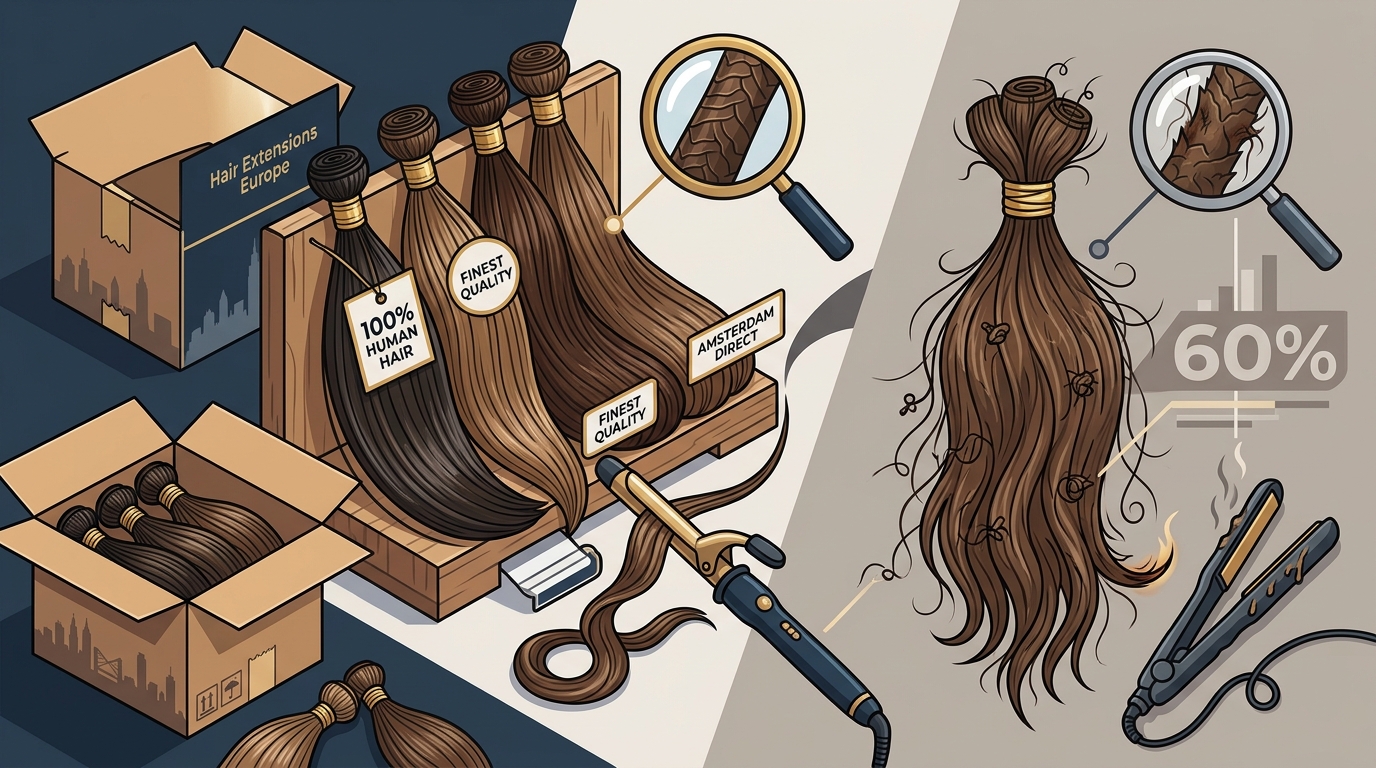
The most devastating mistake buyers make is purchasing processed or synthetic hair labeled as "100% natural." Synthetic fibers are made from plastic polymers that cannot withstand high heat. When you apply a curling iron to synthetic hair, it melts instantly. Real human hair, however, can be styled with heat tools just like your biological hair.
How can you verify authenticity? Perform a simple burn test. Take a single strand from the weft and hold it to a flame. Real human hair will burn slowly, turn to ash, and smell like burning feathers or hair. Synthetic hair will melt into a hard plastic bead and smell like burning plastic. This distinction is vital for longevity.
At Hair Extensions Europe, we guarantee that every product listed under our HAIR EXTENSIONS category is 100% natural. We source our hair from verified donors to ensure ethical collection and premium cuticle alignment. Avoid vendors who offer prices that seem too good to be true. Premium Remy hair requires careful processing to keep the cuticles intact and facing the same direction, which prevents tangling.
Ignoring Texture and Curl Pattern
Matching the texture of your natural hair is not just an aesthetic preference; it is a functional necessity. If you buy straight extensions for curly hair, the weight of the extensions will pull your natural curls straight, causing breakage at the roots. Conversely, putting heavy straight extensions on fine, straight hair can cause the hair to slip out of the attachment points due to lack of friction.
Texture matching is critical for seamless blending. You must consider the density and wave pattern of your natural hair. If your hair is naturally wavy, look for extensions labeled as "body wave" or "loose wave." If you have tight curls, seek out "deep wave" or "kinky curly" variants.
Many buyers make the mistake of assuming that all "straight" hair is identical. In reality, hair textures vary significantly by region and donor. European hair tends to be finer and softer, while Asian hair is often thicker and coarser. Understanding these nuances helps you select a bundle that blends invisibly with your own hairline.
Choosing the Wrong Attachment Method
The method of attachment dictates both the lifespan of the extensions and the health of your natural hair. Using the wrong method for your hair type can lead to traction alopecia, a condition caused by constant pulling on the hair follicles. There are several popular methods available, each with specific use cases.
| Attachment Method | Best For | Lifespan | Pros & Cons |
|---|---|---|---|
| Tape-In Extensions | Fine to medium hair | 6-8 weeks | Flat and invisible. Requires professional removal. |
| Micro Ring I-Tip | Thick, coarse hair | 3-4 months | No heat or glue. Can cause slippage if not tightened. |
| Nano Ring | Very fine hair | 3-4 months | Minimal damage. Small beads are less visible. |
| Pre-Bonded | Long-term wear | 3-6 months | Very secure. Requires heat for removal. |
| Clip-In | Temporary use | Indefinite | Easy DIY application. Can slip if hair is too slippery. |
A common error is attempting to use heavy pre-bonded keratin tips on fine hair. The weight of the keratin and the hair itself can tear the natural hair shaft. Always consult with a professional stylist who understands the structural integrity of your hair before committing to a long-term method.
Mistakes in Color Selection
Color matching is perhaps the most subjective and difficult aspect of buying extensions. Buyers often rely on photos taken under studio lighting, which can be misleading. Natural hair has multiple tones, known as highlights and lowlights, which create depth. A single-dimensional color will look flat and artificial against natural hair.
Always compare swatches in natural daylight. Artificial indoor lighting can shift the perception of blonde, red, and brown tones significantly. If you are between two shades, it is generally safer to choose the lighter option. You can always darken extensions with professional dye, but you cannot lighten them without risking damage to the cuticle.
Another mistake is ignoring the "rooted" or "balayage" options. Solid color extensions can look like a helmet if they do not blend with your natural root growth. Choosing the right color involves understanding your skin tone and natural hair gradient. We recommend using our detailed color charts and consulting with our customer service team for personalized advice.
Confusing Hair Quality Grades
The hair industry uses vague terminology to describe quality. Terms like "virgin," "Remy," and "non-Remy" are often misused. Virgin hair has never been chemically processed, meaning the cuticle is completely intact. Remy hair means the cuticles are kept intact and aligned in the same direction. Non-Remy hair has had the cuticles stripped away, leading to rapid tangling and matting.
Many buyers mistake "Remy" for "Virgin." While Remy hair is high quality, it may have been dyed or permed. Virgin hair is the highest grade because it retains its natural protein structure. When buying from Hair Extensions Europe, you are guaranteed premium Remy and Virgin hair. We do not sell processed or blended hair. Understanding these distinctions protects you from paying premium prices for lower-quality products.
Neglecting Proper Maintenance
Even the highest quality extensions will fail if you neglect proper maintenance. Human hair extensions do not receive natural oils from your scalp, so they dry out faster than your biological hair. Using sulfate-free shampoos and conditioners is non-negotiable. Sulfates strip the hair of moisture, leading to brittleness and breakage.
Another critical mistake is sleeping with wet extensions. This causes severe tangling and matting at the roots. Always braid your hair loosely before bed to prevent friction. Additionally, avoid applying conditioner directly to the attachment points, whether they are tapes, rings, or bonds. This can weaken the adhesive or cause the rings to slip.
Regular professional maintenance is also essential. Tape-ins need to be moved up every 6-8 weeks as your hair grows. Micro rings and nano rings need tightening every 8-10 weeks. Ignoring these appointments can lead to hair loss and damage to your natural hair. We offer Socap Hair Care and Jenoris products specifically designed to extend the life of your extensions.
Key Takeaways
- Verify Authenticity: Always perform a burn test or buy from reputable sources like Hair Extensions Europe to ensure 100% natural hair.
- Match Texture: Select extensions that closely mimic your natural hair's wave pattern to prevent breakage and ensure seamless blending.
- Choose the Right Method: Use Tape-In Extensions for fine hair and Micro Ring I-Tip for thick hair to avoid traction alopecia.
- Color in Daylight: Never rely solely on studio photos. Compare swatches in natural light to avoid tone mismatches.
- Understand Grades: Prioritize Virgin or Remy hair to ensure cuticle alignment and longevity.
- Maintain Regularly: Use sulfate-free products and attend professional maintenance appointments every 6-10 weeks.
- Protect at Night: Braid hair before sleeping to prevent tangling and matting of the extension bonds.
Frequently Asked Questions
How do I know if hair extensions are 100% natural?
You can verify natural hair by performing a burn test. Natural hair burns slowly and turns to ash, while synthetic hair melts into a plastic bead. Additionally, reputable sellers like Hair Extensions Europe provide guarantees and detailed product specifications.
Can I dye my human hair extensions?
Yes, 100% natural human hair can be dyed. However, it is best to darken the hair rather than lighten it, as bleaching can damage the cuticle. Always use professional-grade dye and consult a stylist.
How long do tape-in extensions last?
Tape-in extensions typically last 6 to 8 weeks before needing to be moved up. With proper care and regular maintenance, the hair itself can last for multiple reapplications.
What is the difference between Remy and Virgin hair?
Remy hair has intact cuticles aligned in the same direction. Virgin hair is Remy hair that has never been chemically processed. Virgin hair is considered the highest quality because it retains its natural strength and shine.
Do you ship internationally?
Yes, Hair Extensions Europe ships internationally. Orders placed before 15:00 are dispatched the same day via registered mail from Amsterdam.
How should I wash my extensions?
Wash extensions in a downward motion using sulfate-free shampoo and conditioner. Avoid rubbing the hair together, as this causes tangling. Always let them air dry or use a cool setting on a blow dryer.
Can I swim with hair extensions?
You can swim with extensions, but you must protect them. Chlorine and salt water can dry out the hair. Wet your hair with fresh water before swimming and apply a leave-in conditioner. Rinse immediately after swimming.
Shop Premium Extensions
Avoid the common pitfalls of buying hair extensions by choosing a trusted source. Hair Extensions Europe offers the highest quality 100% natural hair, shipped directly from Amsterdam. Explore our HAIR EXTENSIONS catalog today and find the perfect match for your hair. Click here to browse our collection and start your journey to beautiful, healthy hair.