

The global hair extension market is projected to reach significant valuation milestones in the coming years, driven by consumer demand for natural-looking volume and length. According to recent industry reports, the average consumer spends between $200 and $1,500 for high-quality human hair extensions, depending heavily on the source, processing method, and installation technique. This wide variance often confuses buyers who assume all "human hair" is created equal. Understanding the true cost requires dissecting the supply chain, from the donor source to the final salon application. This guide breaks down every factor influencing price to help you make an informed investment in your hair health and aesthetic goals.
Understanding Hair Sources and Origins
The foundation of any extension cost is the raw material. Not all human hair is sourced ethically or processed uniformly. The geographic origin significantly impacts the texture, cuticle alignment, and price point.
European and Slavic Hair
European and Slavic hair is widely considered the gold standard in the luxury extension market. This hair type is prized for its fine texture, natural shine, and ability to blend seamlessly with Western hair types. Because the supply chain is shorter and the sourcing is more regulated, this hair commands a premium price. For those seeking the most natural look, premium European hair collections offer unmatched quality and longevity.
Asian and Mixed Hair
Asian hair tends to be thicker and coarser. While it is still 100% human hair, it often requires more processing to match the texture of European hair. This processing can sometimes compromise the cuticle integrity if not done correctly. Mixed hair blends are common in mid-range products, offering a balance between cost and natural appearance. Always verify the origin to ensure the texture matches your natural hair for a seamless blend.
Pricing by Extension Type and Method
The method of application is just as critical as the hair quality itself. Different techniques require different amounts of labor, specialized tools, and time, all of which drive up the final cost.
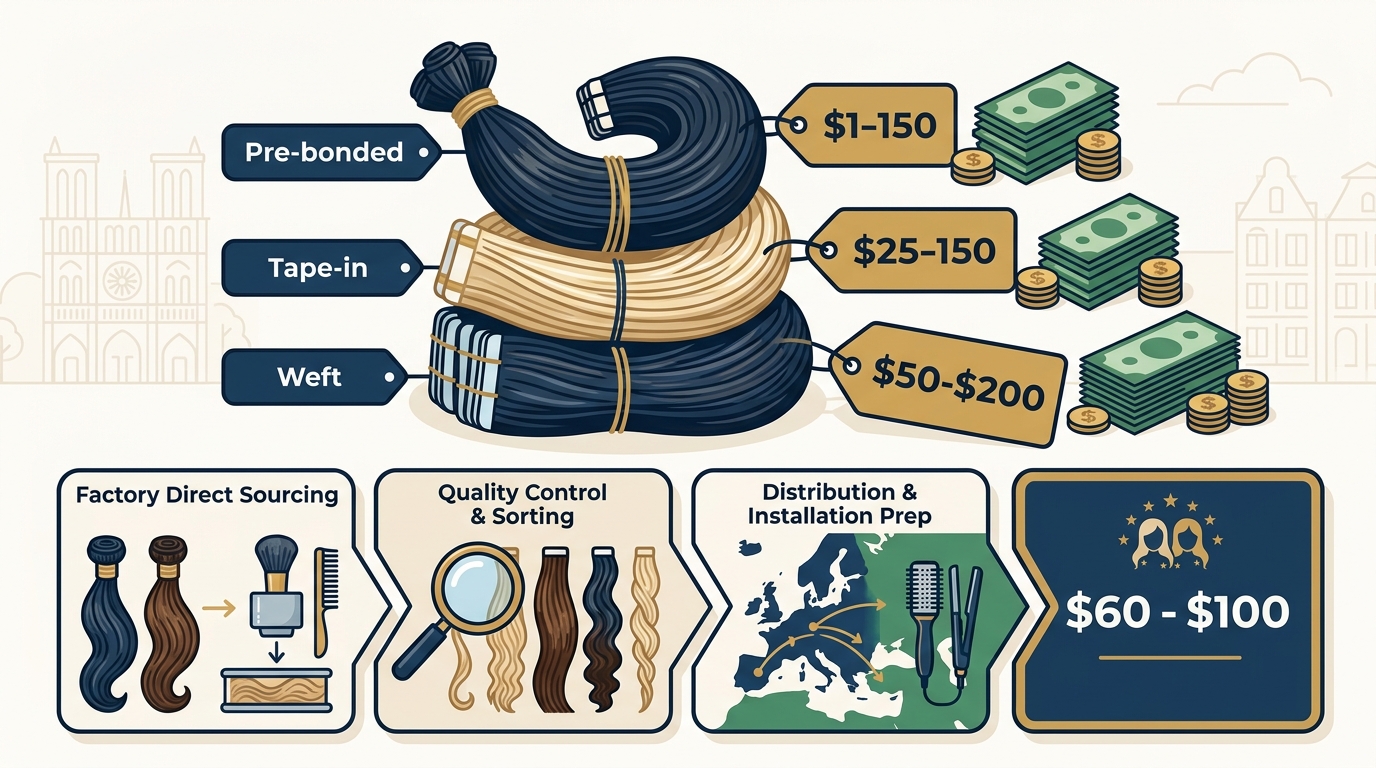
Tape-In Extensions
Tape-in extensions are among the most popular choices for their ease of application and removal. They lie flat against the head, making them virtually undetectable. The cost typically ranges from $300 to $800 for the hair bundles alone, plus installation fees. They are ideal for those seeking a semi-permanent solution that lasts 6 to 8 weeks before needing maintenance. For detailed care instructions, visit our tape-in care guide.
Keratin Bond and Fusion
Keratin bond extensions use a small amount of keratin protein to attach individual strands to your natural hair. This method offers the most natural movement and is suitable for fine hair. However, it is one of the more expensive options due to the labor-intensive application process. Prices can range from $800 to $2,500 or more, depending on the volume required. The longevity of this method is also superior, often lasting 3 to 6 months with proper care.
Micro-Link and Nano-Ring
Micro-link and nano-ring extensions use small metal or silicone beads to clamp the extension to your natural hair. This method is heat-free and chemical-free, making it less damaging to the natural hair shaft. The cost is generally moderate, ranging from $500 to $1,200. It is a great option for those who want to avoid adhesives but still desire a long-lasting result. Explore our micro-link extension collection to see available textures.
Quality Indicators: Why Some Hair Costs More
When comparing prices, it is essential to understand what you are paying for. High-quality hair is not just about the source; it is about the processing and preservation of the cuticle.
Virgin vs. Processed Hair
Virgin hair has never been chemically treated, colored, or permed. This means the cuticles are intact and aligned in the same direction. This alignment prevents tangling and matting, which are common issues with cheaper, processed hair. Virgin hair is hair that has never undergone any chemical processing. As a result, it lasts significantly longer and can be dyed to match your natural color perfectly. Processed hair, while cheaper, often has stripped cuticles that lead to dryness and breakage over time.
Cuticle Alignment
In high-quality extensions, all cuticles run in the same direction. This is known as "remy" hair. If cuticles are misaligned, they will catch on each other, causing severe tangling. Always ask your provider if the hair is "100% Remy" and "cuticle intact." This specification is a key indicator of durability and ease of maintenance. For more on hair integrity, read our hair quality explanation.
Length and Weight
Price increases exponentially with length and weight. Hair is more expensive per gram the longer it is because longer hair is rarer and more difficult to source. A standard set of 20-inch extensions will cost less than a set of 26-inch extensions. Additionally, the weight of the hair (measured in grams) affects the price. More grams mean more volume and a higher cost. Understanding your hair density needs can help you avoid overpaying for unnecessary volume.
Installation and Maintenance Costs
The initial purchase price is only part of the total investment. Professional installation and ongoing maintenance are crucial for the longevity and health of your extensions.
Professional Installation
While DIY kits are available, professional installation is highly recommended for safety and aesthetic results. Salon prices for installation can range from $150 to $600 depending on the method and the stylist's expertise. A skilled stylist ensures that the tension is correct, preventing traction alopecia or damage to your natural hair. Never compromise on the skill of your installer, as improper application can lead to permanent hair loss.
Maintenance and Touch-Ups
Extensions require regular maintenance to stay looking their best. Tape-ins need to be moved up every 6 to 8 weeks as your natural hair grows. Keratin bonds require re-bonding every 3 to 4 months. These touch-up sessions typically cost between $50 and $200 per visit. Factor this recurring cost into your budget when considering the total price of ownership. Proper home care, including using sulfate-free shampoos and specialized brushes, is also essential to extend the life of your investment.
Comparison of Extension Options
The following table summarizes the key differences between popular extension types, including estimated costs and longevity.
| Extension Type | Average Hair Cost | Average Installation Cost | Longevity | Best For |
|---|---|---|---|---|
| Tape-Ins | $300 - $800 | $150 - $300 | 6-8 weeks (maintenance) | Quick application, natural look |
| Keratin Bonds | $600 - $1,500 | $300 - $600 | 3-6 months | Long-term wear, fine hair |
| Micro-Links | $400 - $1,000 | $200 - $400 | 2-4 months | Heat-free, minimal damage |
| Clip-Ins | $150 - $600 | $0 (DIY) | Temporary | Occasional use, budget-friendly |
Key Takeaways
- High-quality human hair extensions typically cost between $200 and $1,500 for the hair alone, excluding installation.
- European and Slavic hair sources are generally more expensive due to their fine texture and natural blend with Western hair types.
- Virgin, Remy hair with intact cuticles is the most durable option and prevents tangling and matting.
- Installation costs vary by method, with keratin bonds being the most labor-intensive and expensive to apply.
- Regular maintenance is required, with tape-ins needing touch-ups every 6 to 8 weeks and keratin bonds every 3 to 6 months.
- Length and weight significantly impact price, with longer and heavier sets costing more due to the rarity of the raw material.
- Professional installation is crucial to prevent damage to your natural hair and ensure a seamless, undetectable finish.
Frequently Asked Questions
How long do high-quality human hair extensions last?
The longevity depends on the type of extension and how well you care for them. Tape-ins last 6 to 8 weeks before needing maintenance, while keratin bonds can last 3 to 6 months. With proper care, the hair itself can be reused multiple times.
Can I color my human hair extensions?
Yes, high-quality virgin human hair extensions can be colored. However, it is best to have a professional stylist do this to avoid damage. Always use heat protectant when styling.
Are human hair extensions damaging to natural hair?
When installed and maintained correctly by a professional, human hair extensions are not damaging. Damage usually occurs from improper installation, excessive tension, or poor home care.
What is the difference between Remy and non-Remy hair?
Remy hair has all cuticles aligned in the same direction, which prevents tangling. Non-Remy hair has cuticles in random directions, leading to matting and a shorter lifespan.
How do I choose the right shade for my extensions?
It is best to match your extensions to the mid-lengths of your hair, not the roots, as roots are often darker due to natural oils. Consult with a stylist for a perfect color match.
Do I need to use special shampoo for extensions?
Yes, you should use sulfate-free and alcohol-free shampoos. Regular shampoos can strip the natural oils from the extensions, causing them to become dry and brittle.
How much weight should I add for my first set of extensions?
For first-timers, it is recommended to start with a moderate amount of weight, typically 100 to 150 grams, to allow your natural hair to adjust. Your stylist can advise based on your hair density.
Find Your Perfect Match
Investing in high-quality human hair extensions is a decision that impacts both your appearance and your hair health. By understanding the costs associated with different sources, types, and maintenance requirements, you can make a choice that fits your budget and lifestyle. Whether you prefer the convenience of tape-ins or the longevity of keratin bonds, the key is to prioritize quality and professional care. Explore our curated collections of premium hair extensions and schedule a consultation with our experts to find the perfect solution for your hair goals.