

Fine, thin hair presents a unique structural challenge for volume enhancement. According to the American Academy of Dermatology, approximately 40 million women in the United States alone deal with hair loss or thinning hair annually. This statistic highlights the massive demand for safe, effective solutions that do not compromise the health of existing follicles. When selecting extensions for fine hair, the primary goal is achieving visible density without causing traction alopecia or breakage. The right approach balances aesthetic volume with mechanical safety.
Understanding Fine Hair Structure
Fine hair is defined by the diameter of the individual hair strand, not the total number of strands on your head. Fine hair is a hair type characterized by a small diameter of each individual strand, making it more susceptible to damage from heavy weights and harsh adhesives. This structural delicacy means that standard extension methods designed for thick, coarse hair can cause immediate stress on the scalp.
When fine hair is subjected to heavy extensions, the follicles can become strained. This strain often leads to traction alopecia, a form of hair loss caused by pulling forces. Therefore, the selection of extension type must prioritize lightweight materials and gentle attachment mechanisms. The objective is to add volume without adding significant weight to the natural hair shaft.
Another critical factor is the scalp's visibility. Fine hair often reveals the scalp more easily than thick hair. This visibility requires extensions that blend seamlessly and provide adequate coverage. The goal is to create a natural hairline and density that looks authentic rather than artificial. Achieving this requires a strategic approach to both the attachment method and the hair quality used.
Best Extension Methods for Delicate Hair
Not all extension methods are created equal. For fine hair, the attachment mechanism must be as gentle as possible. We explore the most suitable options below, focusing on safety and aesthetic results.
Tape-In Extensions
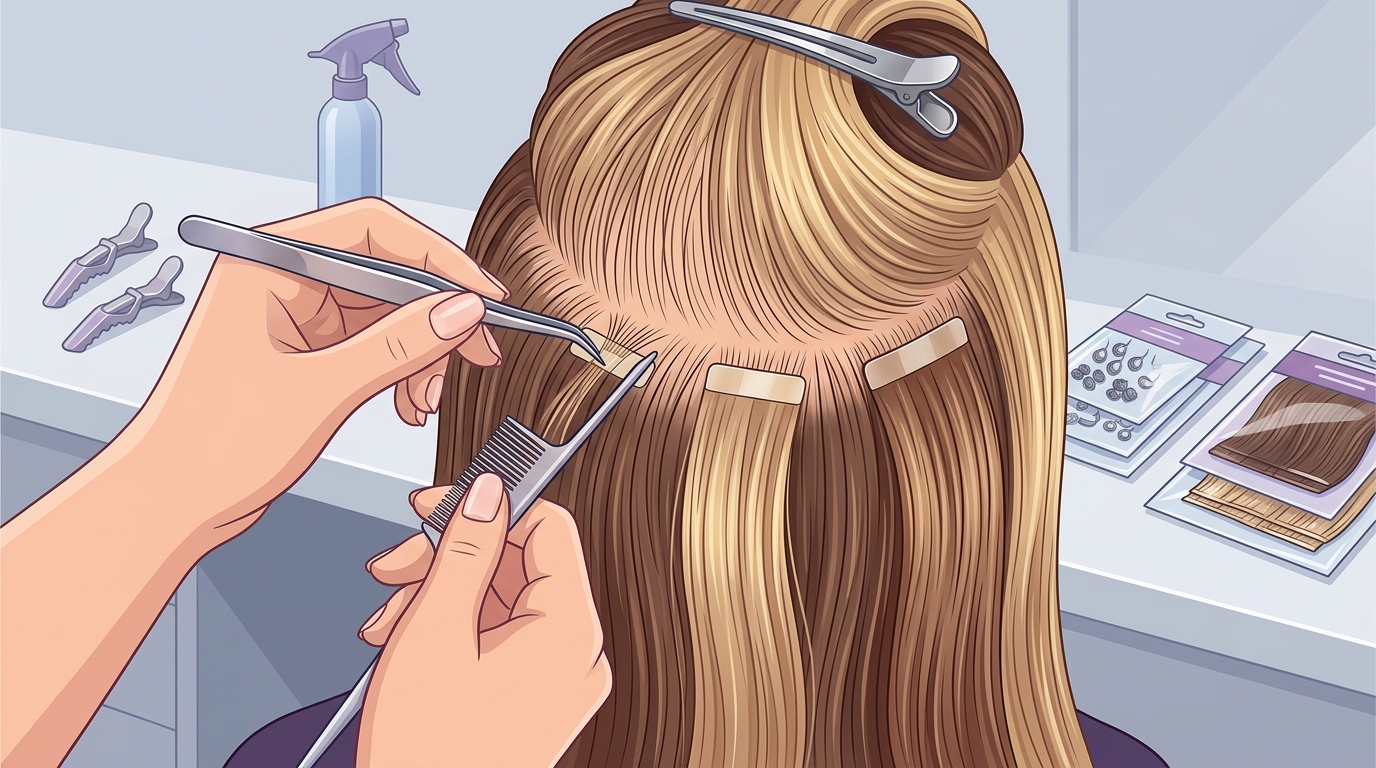
Tape-in extensions are widely considered the gold standard for fine hair. These extensions consist of thin wefts of hair with a medical-grade adhesive strip on one side. Tape-in extensions are a semi-permanent method where thin wefts of hair are sandwiched between two adhesive strips, providing a flat, secure, and lightweight hold. Because the wefts are extremely thin, they lay flat against the scalp, making them virtually invisible even on fine hair.
The lightweight nature of tape-ins is crucial. They distribute weight evenly across a broad surface area rather than concentrating it on a single point. This distribution minimizes stress on the natural hair follicles. Additionally, tape-ins are easy to maintain and can be moved up as your natural hair grows, ensuring a consistent look over time.
Micro Ring and Nano Ring Extensions
Ring extensions offer a glue-free alternative. These methods use small metal or silicone rings to clamp the extension hair to your natural hair. Micro ring extensions are a heat-free method that uses tiny metal or silicone beads to clamp extensions to natural hair, offering a secure hold without adhesive damage. Nano rings are even smaller, making them ideal for very fine hair textures.
The primary advantage of ring extensions is the lack of chemical adhesives. This makes them a safer option for individuals with sensitive scalps or those who prefer to avoid glue. However, the weight of the metal rings must be carefully considered. For fine hair, nano rings are often preferred over micro rings due to their smaller size and lighter weight.
Clip-In Extensions
For those seeking temporary volume, clip-in extensions are an excellent choice. These wefts feature small clips attached to the base, which snap onto the natural hair. Clip-in extensions are a temporary, non-damaging solution that allows users to add volume and length for special occasions without long-term commitment. They are particularly useful for fine hair because they can be removed every night, giving the scalp and hair a rest.
Clip-ins offer the most control over placement. You can choose exactly where to add volume, such as at the crown or around the face. This customization ensures that the extensions blend naturally with your existing hair. They are also the most affordable option, making them accessible for those who want to try extensions before committing to a semi-permanent method.
Selecting the Right Hair and Color
The quality of the hair used in the extensions is just as important as the attachment method. For fine hair, the extension hair should match the texture and weight of your natural hair. Using thick, coarse extension hair on fine natural hair can cause the extensions to slip out or damage the natural strands.
Hair Quality and Texture
100% human hair is the only recommended option for fine hair. Synthetic hair is often heavier and does not blend well with natural textures. 100% human hair extensions are the only recommended option for fine hair because they match the natural texture, weight, and styling capabilities of biological hair. Look for virgin or remy hair, which has the cuticle intact and aligned. This alignment prevents tangling and ensures a smooth, natural appearance.
Color Matching
Color matching is critical for a seamless blend. Fine hair often has a translucent quality, which can make color mismatches more visible. It is advisable to choose a color that is slightly lighter than your natural hair or to use a professional colorist for blending. Hair Extensions Europe offers a comprehensive color guide to help you find the perfect match. Choose the right color hair extensions by comparing your natural hair in natural light against their detailed color charts.
Consider adding highlights or lowlights to create depth. This technique helps the extensions blend more naturally with your natural hair, especially if your hair has natural variations in color. A professional colorist can help you achieve a balanced look that enhances your features without drawing attention to the extensions.
Maintenance and Longevity
Maintaining extensions on fine hair requires a gentle routine. The goal is to preserve the integrity of both the extensions and your natural hair. Proper care extends the lifespan of the extensions and keeps your natural hair healthy.
Washing and Drying
Use a sulfate-free shampoo and conditioner. Sulfates can strip the adhesive from tape-ins and dry out the hair. Sulfate-free shampoo is essential for preserving the adhesive bond of tape-in extensions and preventing dryness in fine hair. Wash your hair in a downward motion to prevent tangling. Avoid rubbing the roots vigorously, as this can loosen the extensions.
When drying, use a low heat setting on your blow dryer. High heat can damage the hair cuticle and weaken the adhesive. Focus the airflow on the roots to dry the scalp quickly, then move down the hair shaft. Always brush your hair gently before washing to remove any tangles.
Brushing and Styling
Use a loop brush or a specialized extension brush. These brushes are designed to glide through the hair without pulling on the attachments. A loop brush is specifically designed to glide through extensions without pulling on the attachment points, preventing breakage in fine hair. Start brushing from the ends and work your way up to the roots. This technique prevents tangles from forming and reduces stress on the extensions.
Avoid applying heavy styling products near the roots. Products like dry shampoo or hairspray can build up on the adhesive, causing it to lose its grip. If you need to use dry shampoo, apply it sparingly and focus on the mid-lengths and ends. Regularly clean the attachment points to remove any product buildup.
Method Comparison Table
The following table compares the most suitable extension methods for fine hair, highlighting their key features, longevity, and suitability.
| Method | Longevity | Weight | Suitability for Fine Hair | Cost Range |
|---|---|---|---|---|
| Tape-In Extensions | 6-8 weeks | Lightweight | Excellent | €100 - €300 |
| Nano Ring Extensions | 4-6 weeks | Very Light | Excellent | €150 - €400 |
| Micro Ring Extensions | 4-6 weeks | Medium | Good | €150 - €400 |
| Clip-In Extensions | Temporary | Variable | Very Good | €50 - €200 |
Key Takeaways
- Fine hair requires lightweight extensions to prevent traction alopecia and breakage.
- Tape-in extensions are the most popular choice for fine hair due to their flat, invisible hold.
- Nano rings offer a glue-free alternative that is gentle on delicate hair strands.
- 100% human hair is essential for blending and styling versatility.
- Sulfate-free products are necessary to maintain the adhesive bond of tape-ins.
- Regular maintenance every 4-8 weeks is required for semi-permanent methods.
- Professional color matching ensures a seamless blend with natural hair.
Frequently Asked Questions
Can tape-in extensions damage fine hair?
When applied correctly by a professional, tape-in extensions are safe for fine hair. The key is using lightweight wefts and ensuring the adhesive is not too strong. Regular removal and reapplication every 6-8 weeks prevent damage.
How long do nano ring extensions last?
Nano ring extensions typically last between 4 to 6 weeks before needing to be moved up. This timeframe depends on your hair growth rate and the care routine you follow.
Are clip-in extensions safe for daily wear?
Clip-in extensions are safe for daily wear as long as they are removed before sleeping. Leaving them in overnight can cause tangling and breakage, especially for fine hair.
What is the best hair type for fine hair extensions?
100% virgin human hair is the best choice. It matches the texture and weight of fine natural hair, ensuring a natural look and feel. Synthetic hair is too heavy and does not blend well.
How do I choose the right color for my extensions?
Choose a color that matches your natural hair in natural light. Consider adding highlights or lowlights for a more blended look. Hair Extensions Europe provides detailed color guides to assist you.
Can I style my extensions with heat?
Yes, you can style human hair extensions with heat. However, always use a heat protectant spray and avoid high temperatures to prevent damage. Keep the heat away from the attachment points.
How often should I wash my extensions?
Wash your extensions 2-3 times a week, depending on your activity level. Use a sulfate-free shampoo and conditioner to maintain the integrity of the hair and adhesive.
Shop Premium Extensions for Fine Hair
Achieving visible results with fine hair requires the right products and professional guidance. Hair Extensions Europe offers a curated selection of high-quality, lightweight extensions designed specifically for delicate hair types. From tape-ins to nano rings, we provide the tools you need for a natural, voluminous look. Visit our store to explore our range of premium hair extensions and accessories. Our customer service team is available to help you find the perfect match for your needs. Contact us today for personalized advice and support.