
Common Mistakes When Applying Hair Extensions to Fine Hair and How to Prevent Damage
\n\nFine hair presents a unique set of structural challenges that require specialized handling during the extension application process. According to recent dermatological studies, approximately 60% of hair damage attributed to extensions stems from improper weight distribution on thin strands. This statistic highlights the critical need for precision when selecting attachment methods. Many individuals overlook the fragility of their natural hair, leading to breakage, traction alopecia, and significant thinning over time. Understanding the mechanical limits of fine hair is essential for maintaining both the longevity of the extensions and the health of your natural growth. This guide outlines the most frequent errors and provides expert-approved prevention strategies to ensure a safe and beautiful result. (Contact page of Hair)
\n\n\n\nThe Weight Distribution Error
\n\nOne of the most critical mistakes when dealing with fine hair is ignoring the total weight of the extension set. Fine hair has a smaller diameter and less tensile strength than coarse or medium hair. When the weight of the extensions exceeds the natural hair's ability to support it, the follicle undergoes excessive tension. This condition, known as traction alopecia, can lead to permanent hair loss if left unaddressed. The average fine hair strand can only support a limited amount of additional weight before the cuticle layer begins to fray and break. (Customer Service van goedkoophaar)
\n\nTo prevent this, you must prioritize lightweight application techniques. Avoid opting for full-head wefts or heavy pre-bonded keratin tips unless your hair density is exceptionally high for your texture. Instead, focus on distributing the weight across a larger surface area. Methods like tape-in extensions or micro-ring I-tip extensions are often preferred because they lay flat against the scalp and distribute weight more evenly. Always consult with a professional who can assess your hair density before committing to a high-volume look. (Hair Extensions Europe best)
\n\n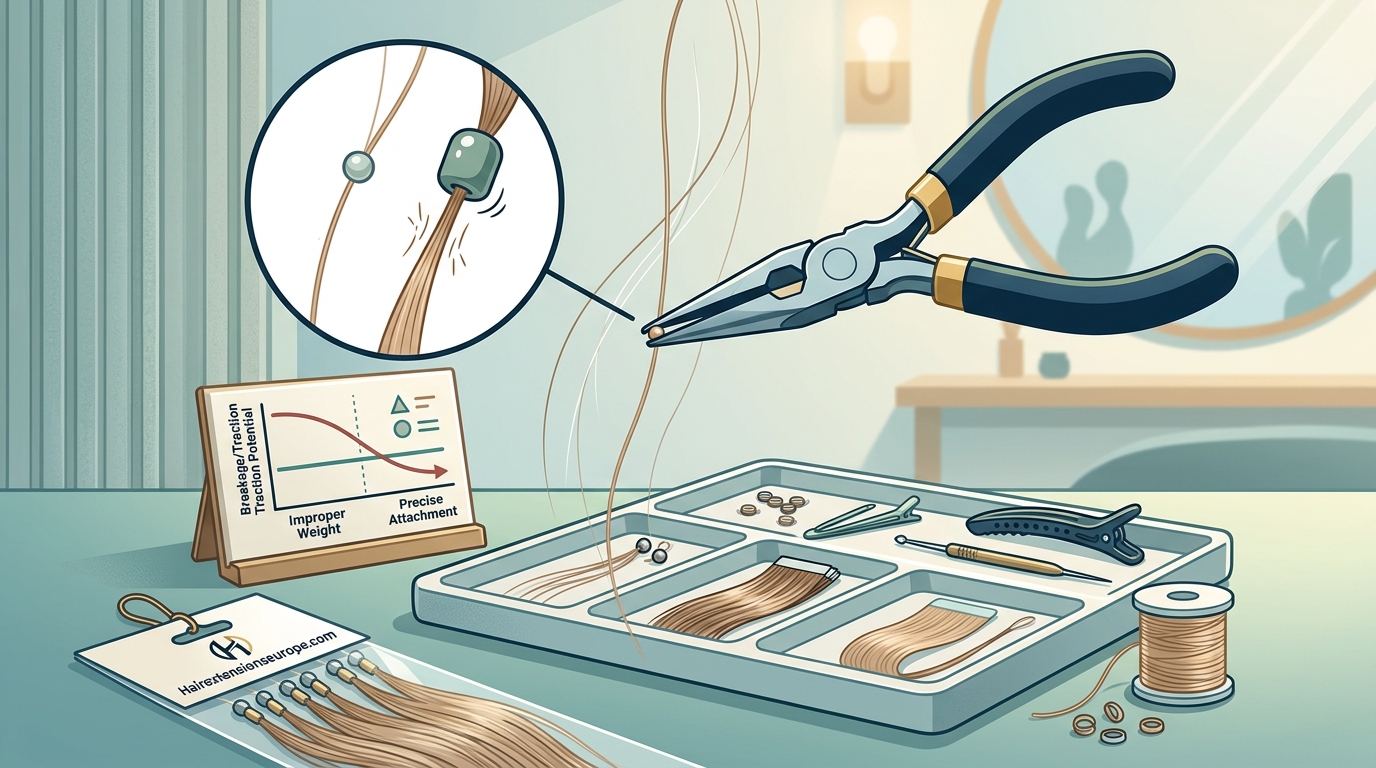
Choosing the Wrong Attachment Method
\n\nSelecting an inappropriate attachment method is a frequent error that can compromise the integrity of fine hair. Heat-based methods, such as pre-bonded keratin tips, involve applying high temperatures directly to the hair shaft. For fine hair, this heat can cause the cuticle to melt or become brittle, leading to immediate breakage. Similarly, heavy micro-loop rings can create pressure points that snap thin strands during the application process. (Hair Extensions Europe best)
\n\nDefinition: Micro-ring extensions are a type of hair extension where small metal or silicone rings are used to clamp the extension hair to the natural hair without the use of heat or glue. These are often safer for fine hair because they do not involve thermal damage. However, the size of the ring must be carefully matched to the thickness of your natural hair. If the ring is too large, it will slip. If it is too small, it will crush the hair. Tape-in extensions are another excellent alternative for fine hair. They provide a secure hold with minimal weight and no heat, making them a popular choice for those seeking a balance between durability and safety. (Hair Extensions Europe best)
\n\nWhen exploring options, consider visiting our