

Choosing the right hair extension method is the single most critical decision for achieving a natural look and maintaining long-term hair health. According to recent industry data, the global hair extension market is projected to grow significantly, with a large portion of that growth driven by the demand for semi-permanent and temporary solutions that offer versatility. Understanding the mechanical and aesthetic differences between tape-in and clip-in systems is essential for selecting the option that aligns with your lifestyle, budget, and hair density. (Contact page of Hair)
What Are Tape-In Extensions?
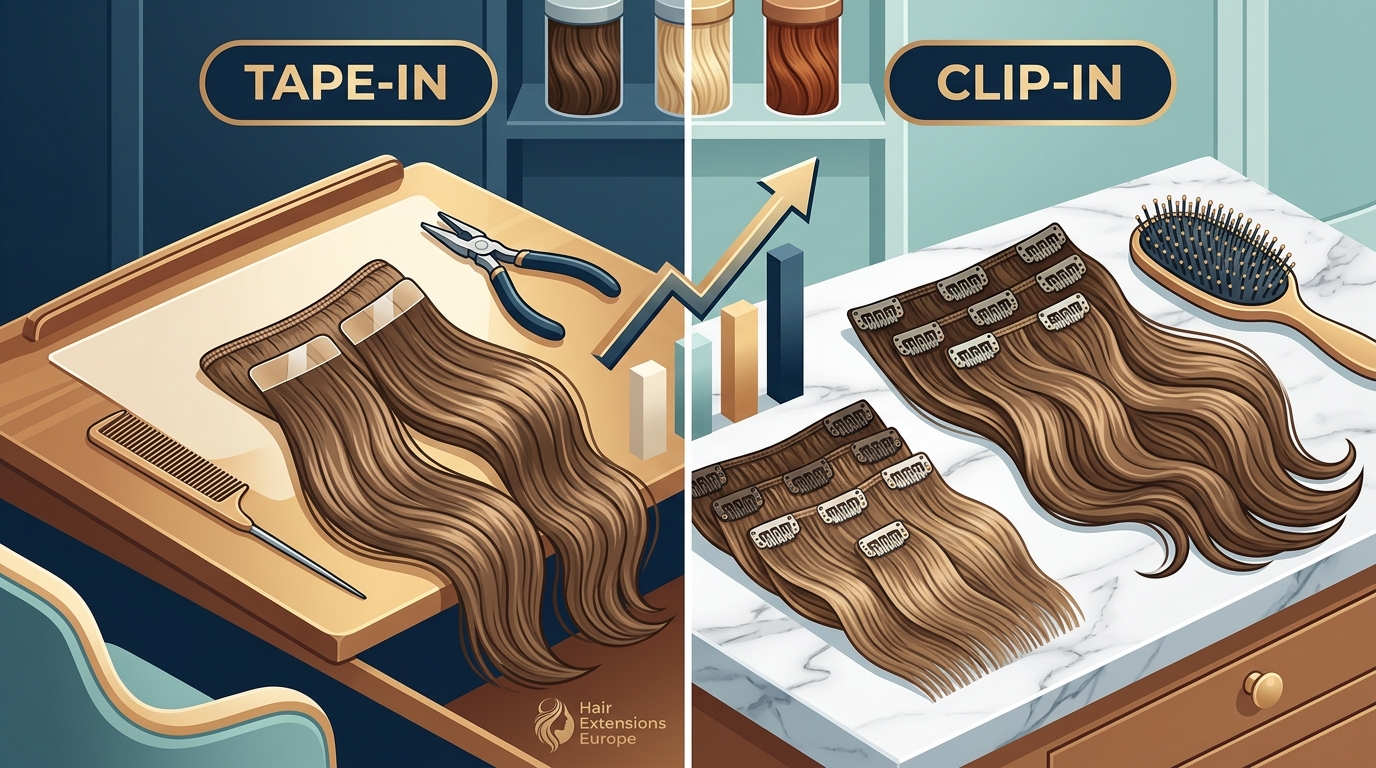
Tape-in extensions are widely considered the gold standard for semi-permanent hair enhancement. These extensions consist of thin, wefts of 100% natural human hair with a medical-grade adhesive tape running along the top edge. This design allows for a flat, seamless application that lies flush against the scalp, making them nearly invisible when styled correctly. (Customer Service van goedkoophaar)
The application process involves sandwiching a thin layer of your natural hair between two tape-in wefts. This method distributes weight evenly across the head, which reduces tension on individual hair follicles compared to older bonding methods. Because they are semi-permanent, they are designed to stay in place for several weeks at a time, offering a consistent look without daily effort.
For those seeking a low-maintenance routine, tape-ins are an excellent choice. You can wash, style, and sleep with them as if they were your own hair. However, they require professional removal and reapplication every six to eight weeks to prevent the adhesive from drying out or causing tangling. You can explore our premium tape-in extensions to find the perfect match for your hair texture and color.
What Are Clip-In Extensions?
Clip-in extensions offer the ultimate in flexibility and control. These wefts feature small, sturdy metal clips attached to the top of the hair piece. The clips snap securely onto your natural hair, allowing you to add volume, length, or color instantly. Unlike tape-ins, clip-ins are not attached to the scalp for long periods, meaning they can be removed before sleeping, showering, or exercising.
This category is ideal for individuals who do not want to commit to a long-term wear schedule or who have specific events where they want to enhance their appearance temporarily. The clip-in collection at Hair Extensions Europe includes various weights and lengths, allowing for a customized look that ranges from subtle volume to dramatic transformation.
Because they are removed daily, clip-ins put zero long-term stress on your hair follicles. This makes them a safer option for those with fine or fragile hair that cannot support the weight of semi-permanent extensions. However, they require daily application and removal, which can become time-consuming for some users.
Comparison of Application Methods
The primary difference between these two methods lies in the application process and the resulting wear time. Tape-in extensions require a professional stylist to apply and remove them. The process involves sectioning the hair and carefully placing the wefts close to the roots. This professional intervention ensures that the adhesive bonds correctly and that the hair is distributed evenly to avoid visible lines.
In contrast, clip-in extensions are designed for DIY application. They can be applied in minutes at home with no special tools required. This accessibility makes clip-ins a popular choice for beginners or those who prefer to manage their beauty routine independently. The table below summarizes the key operational differences.
| Feature | Tape-In Extensions | Clip-In Extensions |
|---|---|---|
| Application | Professional only | DIY / At-home |
| Wear Time | 6-8 weeks (semi-permanent) | Daily (temporary) |
| Visibility | Flat, nearly invisible | Visible at the root if not blended |
| Hair Health Impact | Low tension if maintained | Zero long-term tension |
| Maintenance | Regular salon visits | Home care only |
Durability and Lifespan
When evaluating the longevity of hair extensions, it is important to distinguish between the lifespan of the individual weft and the duration it can remain in the hair. High-quality human hair extensions, such as those available from Hair Extensions Europe, are durable and can last for years with proper care. However, the method of attachment dictates how often you need to replace or reposition them.
Tape-in extensions typically need to be moved up every six to eight weeks as your natural hair grows. The adhesive weakens over time due to natural oils and product buildup. If left in too long, the tapes can slip or cause matting. Therefore, the recurring cost of maintenance is a factor in the overall value of tape-ins.
Clip-in extensions, when cared for correctly, can last for several years. The clips may loosen over time, but they can often be tightened or replaced. Since they are not subjected to the wear and tear of daily washing and styling while attached, the hair fibers themselves remain in excellent condition for a longer period compared to semi-permanent methods.
Maintenance and Care Requirements
Maintenance routines differ significantly between the two types. Tape-in extensions require specialized care to preserve the adhesive bond. You must use sulfate-free shampoos and conditioners that do not contain heavy oils near the roots. Brushing must be done gently with a loop brush to prevent tangling at the tape tabs. Neglecting this routine can lead to matting, which is difficult to reverse.
Clip-in extensions are easier to maintain in terms of frequency but require careful handling during cleaning. Because they are removed daily, you can wash them thoroughly after every few wears. This deep cleaning helps remove product buildup and keeps the clips hygienic. It is recommended to let them air dry completely before storing them in a cool, dry place.
Both methods benefit from the use of high-quality hair care products. Socap hair care products and other specialized treatments can help maintain the softness and shine of your extensions, ensuring they blend seamlessly with your natural hair.
Cost Analysis and Value
The cost of hair extensions is not just about the initial purchase price. It includes installation, maintenance, and removal fees. Tape-in extensions generally have a higher upfront cost due to the quantity of hair required and the professional installation fee. However, the convenience of not having to apply them daily can be a significant value add for busy professionals.
Clip-in extensions often have a lower initial investment, especially for those who only need partial coverage. They eliminate the need for frequent salon visits, which can save hundreds of euros annually. For individuals who are on a budget or who want to experiment with different looks without commitment, clip-ins offer superior financial flexibility.
Ultimately, the best choice depends on your personal priorities. If you value time savings and a consistent look, tape-ins are worth the investment. If you prioritize hair health, versatility, and lower long-term costs, clip-ins are the superior option.
Key Takeaways
- Application: Tape-ins require professional installation, while clip-ins are designed for DIY use.
- Duration: Tape-ins last 6-8 weeks per set, whereas clip-ins are removed daily.
- Hair Health: Clip-ins put zero stress on follicles, making them ideal for fine hair.
- Convenience: Tape-ins offer a "wake up and go" lifestyle, while clip-ins require daily effort.
- Cost: Clip-ins have lower recurring costs, while tape-ins involve regular salon fees.
- Quality: Both methods utilize 100% natural human hair for a seamless blend.
- Maintenance: Tape-ins require sulfate-free products to protect the adhesive bond.
Frequently Asked Questions
Are tape-in extensions damaging to natural hair?
When applied and removed correctly by a professional, tape-in extensions are not damaging. They distribute weight evenly, reducing tension on individual strands. However, improper removal or leaving them in too long can cause tangling and breakage.
Can I sleep with clip-in extensions?
No, you should always remove clip-in extensions before sleeping. Sleeping with them can cause tangling, matting, and damage to both the extensions and your natural hair.
How long do clip-in extensions last?
With proper care, high-quality clip-in extensions can last for several years. The lifespan depends on how often they are worn and how well they are cleaned and stored.
What is the difference in weight between tape-in and clip-in?
Tape-in extensions are generally lighter per weft because they are thin and flat. Clip-ins can vary in weight depending on the volume desired, but they are designed to be secure without pulling on the scalp.
Can I color my tape-in extensions?
Yes, since they are made of 100% human hair, tape-in extensions can be colored. However, it is recommended to have a professional stylist perform the coloring to avoid damaging the adhesive tape.
How do I choose the right color for my extensions?
Choosing the right color involves matching your natural hair in both light and shadow. Our color guide can help you find the perfect match for your hair tone.
Do tape-in extensions fall out easily?
No, when applied correctly, tape-in extensions are very secure. They can withstand washing, styling, and normal daily activities. They only come out during professional removal.
Shop Premium Extensions
Whether you choose the convenience of tape-ins or the versatility of clip-ins, Hair Extensions Europe provides the highest quality 100% natural hair at affordable prices. Explore our extensive collection to find the perfect extensions for your needs. Visit our store today to browse our full range of products and accessories.